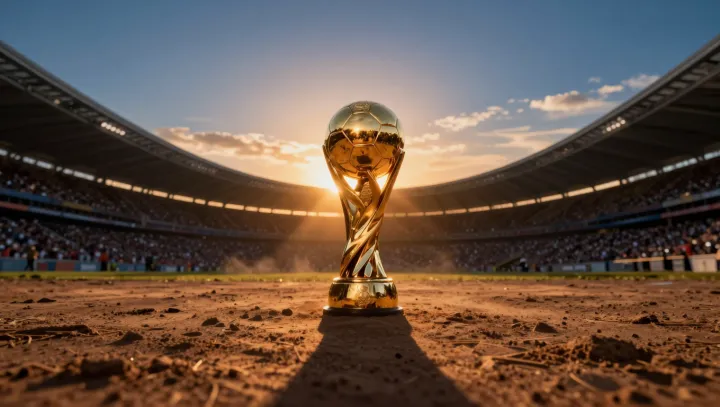
A small object steals the game. The 6.175‑kilogram gold‑plated World Cup trophy appears for only a few televised moments, yet those seconds often brand themselves deeper into fan memory than the full match, because scarcity sharpens desire and ritual fixes it in place.
More powerful than any scoreboard is the way the trophy is staged as the sport’s ultimate monopoly prize, a single artifact tied to just one winning nation per tournament, handled by a tiny circle of players and heads of state under tight FIFA protocols that resemble chain‑of‑custody rules for state assets, so the object carries the aura of forbidden access as much as athletic success.
Memory follows cameras, not tactics. Broadcasting schedules choreograph the reveal like a liturgy: the walk up the stairs, the handover on a branded podium, the slow lift under falling confetti, every angle repeated in highlight reels, advertising campaigns and archival montages, while the complex geometry of pressing systems and expected goals data is compressed into a single freeze‑frame of metal above a captain’s head.
What fans replay is not the pass before the assist. It is the coronation scene, because that image converts a chaotic, probabilistic contest into a finished story with a clear protagonist and a shining prop, and in that staged certainty the modest 6.175‑kilogram trophy outweighs ninety minutes of uncertainty.