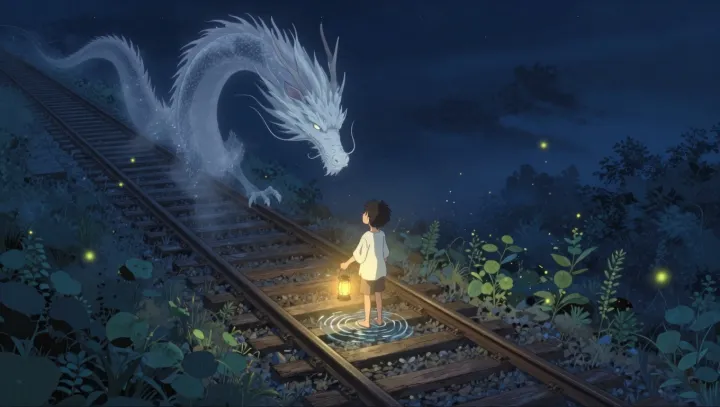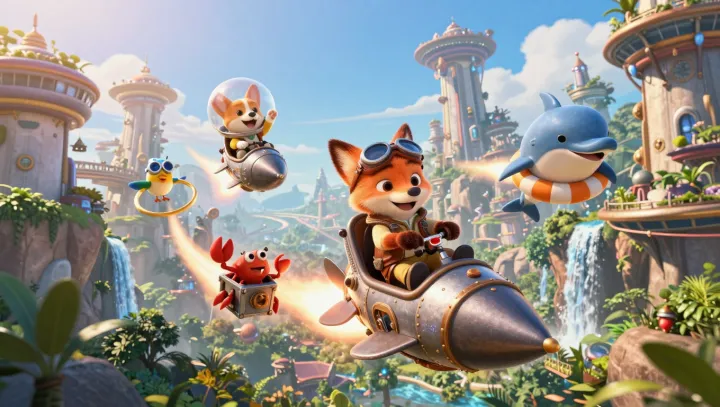
Bright posters win. Not because they are prettier, but because they fit the way a young brain is wired to sample the world, with high-contrast shapes, stable edges, and generous blocks of sky that calm the visual system instead of hammering it.
Fast-cut cartoons ask too much. Each jump forces new saccades, fresh figure-ground separation, and repeated reallocation of limited working memory, a load that pushes many children into partial shutdown rather than deep focus, even while they appear glued to the screen.
Static machines invite hunting. Gears, bolts, pipes and tracks create dense, legible structure that rewards slow eye movements, engages visual cortex feature detectors, and lets the child run tiny experiments in mental simulation without the scene vanishing between edits.
Open sky is the quiet hero. Large uniform fields lower stimulus density, ease arousal in the autonomic nervous system, and frame the machinery so the child can zoom attention in and out, a rhythm almost impossible when every corner of a cartoon frame screams for notice.
What looks like boredom protection is often just overload. When motion stops, detail stays, and the horizon stays put, attention is not hijacked; it is allowed to settle, to graze, and to grow its own questions in peace.