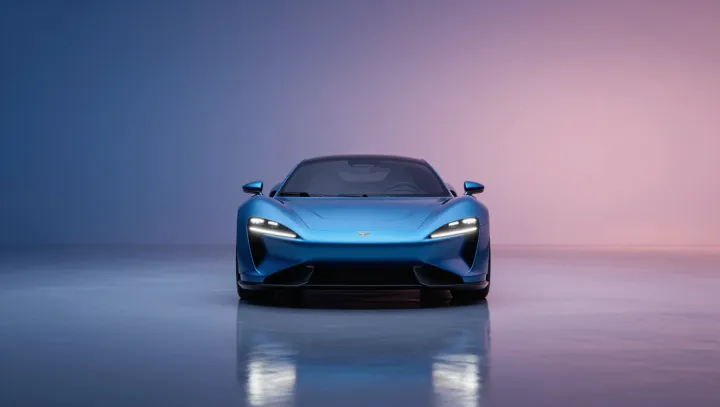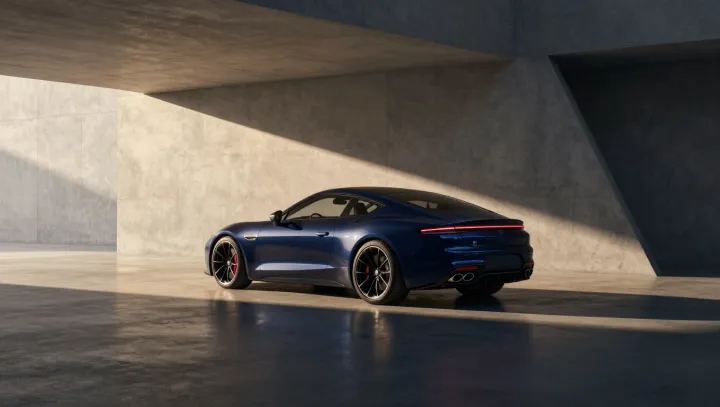
Raw concrete sells fantasy faster than chrome. Against a blank, brutal wall, a low coupe stops competing with trees, people or windows that would reveal its true scale, so your visual cortex loses stable reference points and quietly upgrades the car in size, stance and status.
Design chiefs rely on a simple bet. Strip the scene to concrete, shadow and sheet metal, and you trigger the same depth perception shortcuts that stereopsis and motion parallax use in real driving, yet you remove the messy data that could correct the illusion, so the car looks longer, lower, more planted than its wheelbase really allows. A low camera exaggerates foreshortening, hard side light throws a stretched shadow that hints at velocity, and high local contrast activates the brain’s motion detectors even in a still frame.
Price is manipulated just as aggressively. Luxury bias in consumer cognition links minimalism, negative space and heavy materials with higher cost, so a coupe framed by bare concrete and deep shadow inherits the visual code of high‑end architecture, not mass retail. By the time you reach the spec sheet, your internal benchmark for speed and value has already been nudged upward by physics of light and depth that felt like mood, not marketing.