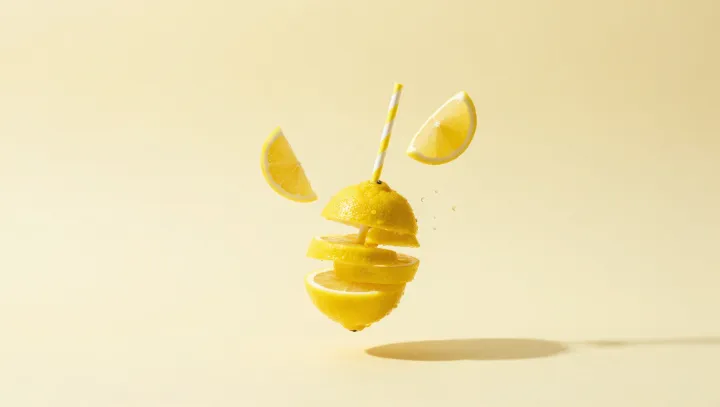
A sliced lemon in a glass does not get stronger; your brain does. The moment steel meets rind, physics and chemistry stage a coordinated assault on your senses, turning a quiet citrus note into something that feels almost amplified.
The sharp jump starts with surface area. One intact wedge exposes little juice and only a small patch of peel, so few volatile molecules escape. Cut it into liquid, and cell walls rupture, oil glands in the zest burst, and diffusion goes into overdrive. Compounds such as limonene, citral and aldehydes flood the air and the liquid phase, boosted by Henry’s law and rapid dissolution at the cut interface.
The stronger hit is not just smell; it is a sensory merger. Sourness on the tongue comes from hydrogen ions binding to acid-sensitive ion channels, yet intensity is largely decided by olfaction. Once the lemon sits in the drink, every sip drives aerosols and vapors toward the back of the nasal cavity. This retronasal olfaction recruits far more olfactory receptor neurons than a distant, uncut wedge on the rim ever could, so the same total amount of lemon feels louder, brighter, almost excessive.
There is a final twist. By slicing directly into the drink, you shift where and how concentration gradients form. Local pockets near the cut piece can reach higher titratable acidity than the bulk mix, so early sips hit chemoreception hot spots on the tongue and soft palate. The brain then integrates these transient spikes in sour and aroma as a single, upgraded flavor event, even though not one extra molecule has entered the glass.