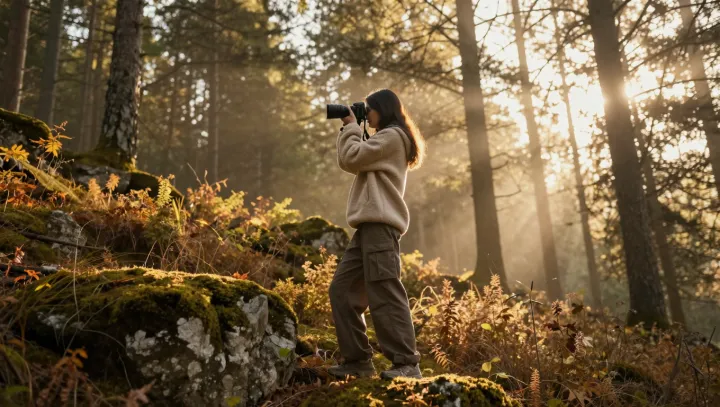
Wet leaves on a crooked trail often beat a polished backdrop in trust. The sensor behaves identically, converting photons into charge and then into digital values, yet the forest frame carries different metadata in the viewer’s mind: no crew, no lighting grid, no implied client brief. What changes is not the silicon, but the social script we project onto that raw file.
The blunt truth is that imperfection reads as a risk premium. A stray branch, uneven exposure, or motion blur signals low art direction and, by extension, low impression management, so the viewer’s Bayesian prior shifts toward “unperformed self.” Studio portraits, built on key light ratios and controlled dynamic range, advertise intervention. They trigger the same suspicion as a heavily edited statement: technically immaculate, psychologically negotiated.
Honesty, then, is a judgment about constraints, not pixels. A forest shot suggests stochastic conditions and limited retakes; a studio frame implies infinite rehearsal and retouching, even when neither assumption is fully accurate. Micro-details like clothing creases, asymmetric posture, and ambient color cast act as authenticity cues that our visual cortex and prefrontal cortex fuse into a story about motive. The camera does physics; the viewer does ethics.