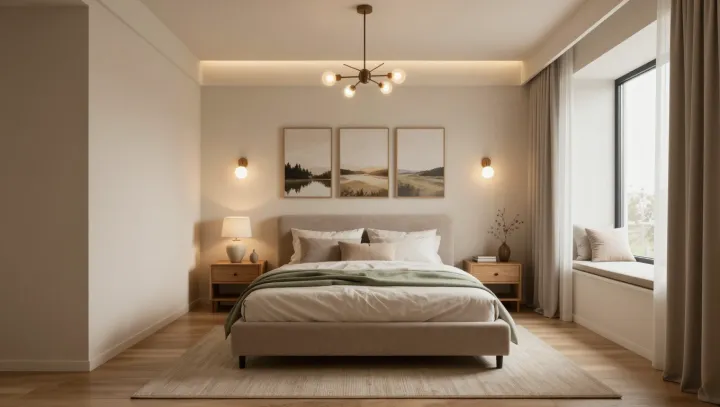
Visual noise is the underrated enemy of sleep. Color-saturated posters, busy gallery walls and harsh bedside LEDs keep the brain on alert, loading the visual cortex with competing stimuli that fight the dimming of the reticular activating system, the network that should be easing you toward drowsiness.
The sharper judgment is this: three calm prints on the wall can do more for sleep onset than another expensive mattress topper. By capping artwork at a small, coherent set, you cut stimulus variety, which reduces saccadic eye movements and lowers cognitive load, both known to delay the transition into stage 1 non rapid eye movement sleep. Soft, low-contrast imagery gives the occipital lobe less to decode, making it easier for melatonin-driven circadian processes to dominate.
Even more underestimated is the bedside lamp. Swap a bright, cool bulb for a warmer, dimmer one and you shrink blue wavelength exposure that suppresses melatonin via intrinsically photosensitive retinal ganglion cells. Warmer light narrows the signal to something closer to dusk, nudging the suprachiasmatic nucleus to release its brake on sleep pressure. No diet change. No new bedtime ritual. Just fewer visual inputs and kinder light, clearing a quieter mental runway for sleep.