Cosmic risk, not romance, drives the bolder argument. Some astrophysicists contend that a single solar system, even with a Mars backup, is just one fragile sample in a violent cosmos, where low-probability events can still wipe out every nearby world tied to the same parent star.
The hard claim is simple. Mars is too close. A sufficiently energetic gamma ray burst or a rare class of supernova, modeled through radiative transfer and stellar evolution theory, could sterilize both Earth and Mars together, because they share almost identical exposure to galactic threats that operate on kiloparsec scales rather than planetary ones.
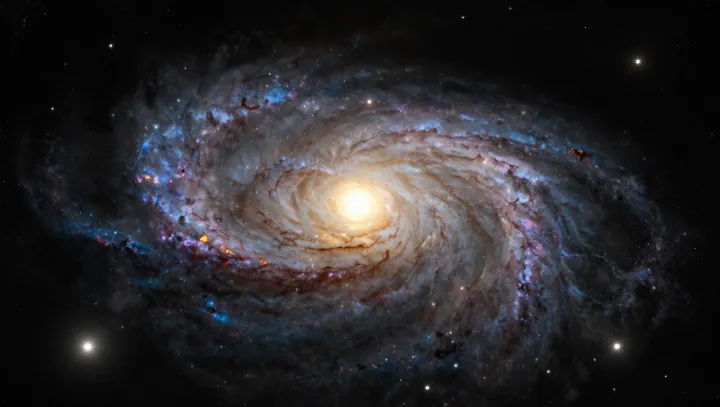
More radical is the statistical logic. Spread a species across many star systems scattered through the spiral arms and the survival odds change from all-or-nothing to something more like portfolio diversification, described in risk theory as reducing correlated failure by spatially decorrelating exposures to the same astrophysical hazard field.
Astrobiology adds a darker twist. A single biosphere cluster may be vulnerable to self-inflicted disasters, from engineered pandemics to uncontrolled artificial intelligence, and those dangers, like ionizing radiation, can be highly correlated inside one dense technological network but far less so across light-years.
Hence the galaxy-scale proposal. Build habitats around many stars, rely on independent ecological and technological systems, and the mathematics of Poisson processes and independent failure modes starts to favor a thin, dispersed web of civilizations over one heroic but local red outpost on a nearby desert world.