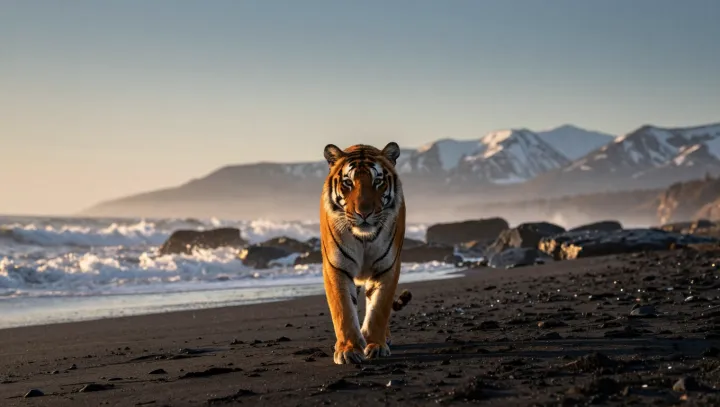
Bare sand, not shadowed undergrowth, now frames the approach of some apex hunters. A 200‑kilogram body, built for forest ambush and short, explosive charges, is being redeployed across exposed shorelines where cover is reduced but not absent, traded instead for prey density and predictable movement corridors along the water’s edge.
The real surprise is not the risk. It is the math. Along open coasts, fish‑rich shallows, stranded carcasses and shoreline herbivores concentrate biomass, so energy intake per unit effort can exceed that of stalking scattered forest prey, especially when tidal cycles and surf zones funnel animals into narrow bands that function like biological conveyor belts.
Such behavior is not a quirky exception; it is behavioral plasticity under pressure. Predators adjust locomotor patterns, switch from cover‑based ambush to pursuit‑assisted interception, and exploit sensory advantages in open light, while human disturbance, reduced forest prey and altered riparian structure push them toward beaches, mudflats and sandbars where old body plans meet new hunting rules.
What this reveals is blunt. Morphology sets constraints, but decision‑making and learning rewrite tactics, allowing large carnivores to treat habitat categories as negotiable labels rather than fixed destinies, turning a forest specialist into a shoreline opportunist whenever the cost–benefit ledger tips toward the surf.