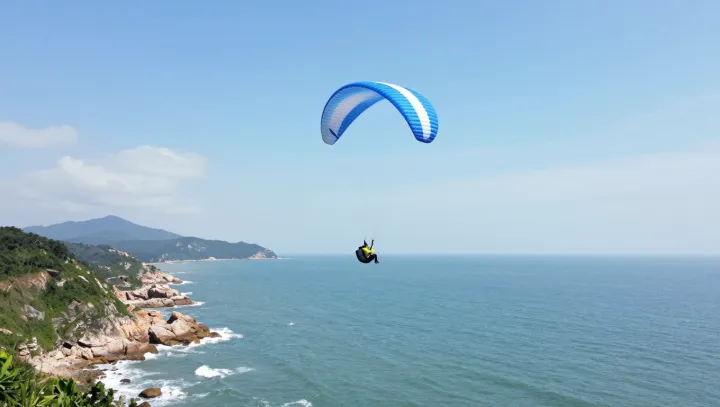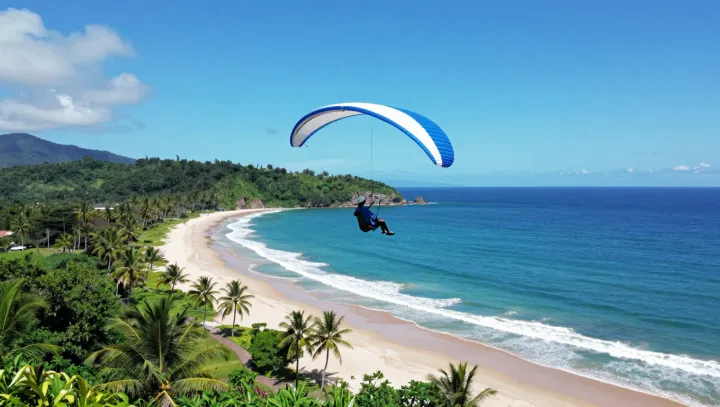
Roaring surf does not scare veteran hang glider pilots; it edits their fear. Just above a tropical shoreline, ground effect, rotor turbulence, and shear layers leave almost no margin for control input, yet seasoned pilots report a steady, almost blank focus rather than panic.
The calm is not bravery first; it is automation. Years of procedural memory turn pitch corrections, weight shifts, and airspeed management into motor programs that run faster than conscious thought, offloading work from the prefrontal cortex and trimming the time window in which anxiety can even form as language.
Equally counterintuitive is how sensory overload becomes a filter. Dense visual flow from rocks and waves, the tight roar of wind, and constant vestibular feedback saturate the thalamus and dampen noisy inner chatter, narrowing attention to aerodynamic cues like angle of attack and stall margin while everything else fades to irrelevant backdrop.
Risk itself also gets reweighted. For experts, skimming low is not an abstract hazard but a precise probability field shaped by lift gradients, orographic lift, and their own reaction envelope; when that mental model fits the real airflow, the brain reads coherence, not chaos, and coherence feels, quite simply, calm.