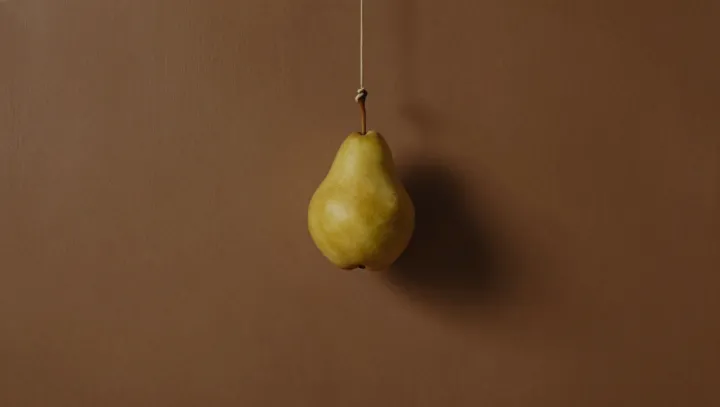
A painted pear does not just resemble fruit; it hijacks the same circuitry that guides a hand to real food. On the canvas, still-life masters stacked every primitive cue that the early visual cortex treats as a yes-or-no signal: cast shadow, specular highlight, edge contrast, and tiny gradients of luminance along the curve of the form.
This was not mysticism; it was iterative reverse‑engineering of perception. By exaggerating occlusion, sharpening local contrast at the rim, and aligning perspective with a viewer’s eye height, painters fed area V1 and V2 exactly the patterns those neurons interpret as three‑dimensional layout and reachable distance. Linear perspective and chiaroscuro work like a compression codec for depth, condensing the physics of light into a set of cues the brain has been tuned to trust since infancy.
The bolder claim is that still-life painting functions as a laboratory for low-level vision. When a hanging pear slightly overlaps a knife handle, when its shadow kisses the wall at just the right angle, the brain’s figure–ground segmentation and size constancy systems fire as if confronted with an object in peripersonal space. The image stays flat. Perception refuses to treat it that way.