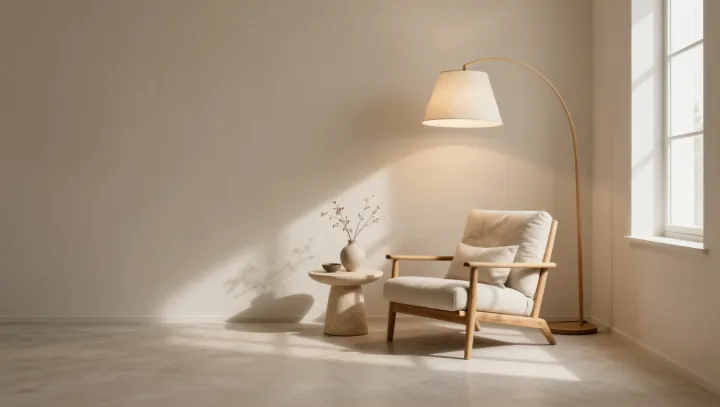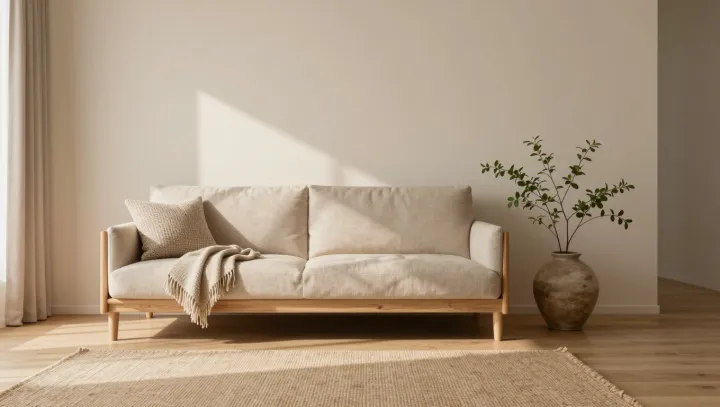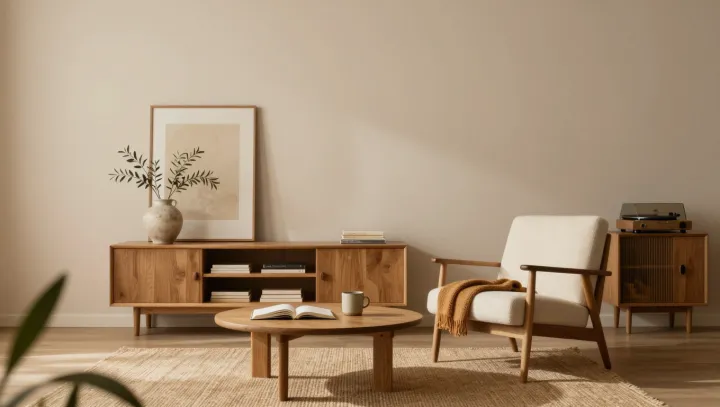
Bare space, not more stuff, is what the brain reads as kindness. A living room stripped to warm wood, soft textiles, and a slim line of books cuts the volume of visual input the visual cortex must parse, so fewer edges, colors, and competing shapes demand feature detection and attentional control every second.
Cluttered rooms feel safe only by nostalgia; physiologically they behave like mild threat. Each souvenir and throw pillow becomes another stimulus the amygdala and prefrontal cortex must categorize, feeding decision fatigue and raising allostatic load, the cumulative wear on stress systems, even when a person insists they are just relaxing on the sofa.
By contrast, wood grain, soft fabric, and a short, readable row of books create a stable, low‑entropy scene. Predictable textures and a limited color palette reduce sensory processing demands and free working memory, which is why heart rate and cortisol often drop in simplified environments while subjective comfort quietly rises.