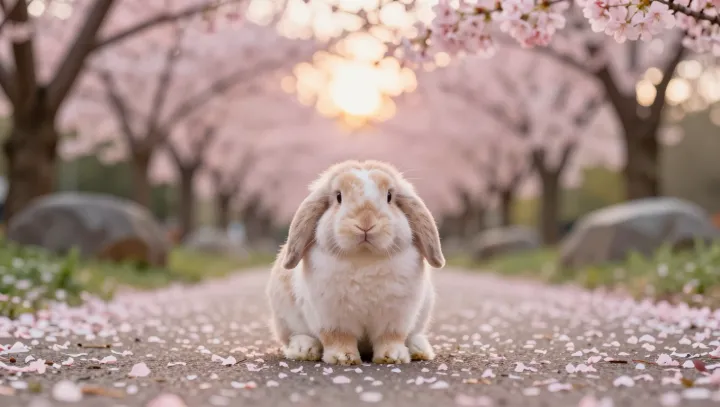
Golden‑hour light does not just flatter humans; it quietly disarms a rabbit. Low‑angle sunlight stretches shadows, reduces harsh contrast on fur, and drops luminance to a level that calms the autonomic nervous system, so the animal’s hyper‑vigilant scanning slips into a slower, almost meditative state.
More than fear, geometry makes the rabbit photogenic. Eyes pushed out to the sides create an enormous binocular overlap toward the front while still covering most of the horizon, a trade‑off that limits depth precision but maximizes motion detection across nearly three hundred degrees. For a photographer, that means the animal can keep watching for threats without pivoting its body, so the head stays framed, ears aligned, whiskers set like antennas, all within one stable axis.
The real surprise is that panic yields stillness. The classic freeze response, driven by sympathetic arousal and muscle co‑contraction, locks the rabbit in a posture that minimizes outline movement against the background. To a predator, that is camouflage; to a lens, it is a gift. Exposure can be lengthened, focus can be micro‑adjusted, and every tiny vibration drops, until the jumpiest creature in the field becomes the sharpest subject in the frame.