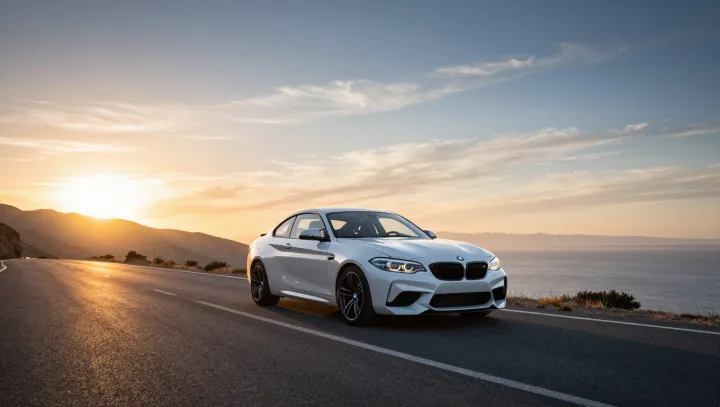
Steering feel, not horsepower, is what quietly hooks a certain kind of driver. In a stiff coupe, every micro‑bump, camber change and load shift travels almost unfiltered from contact patch to palms, giving the brain a dense stream of sensory data it never receives in a plush commuter car.
The claim sounds romantic, yet it rests on hard biology and engineering. Human proprioception and the vestibular system fuse inputs from muscles, inner ear and vision; a tightly damped chassis, rigid bushings and quick steering ratio raise the signal‑to‑noise ratio of that input, so the central nervous system can construct a more detailed internal model of grip, slip angle and available traction.
Soft, comfort‑tuned cars do the opposite. Big sidewalls, compliant suspension geometry and aggressive isolation mounts filter out high‑frequency cues, so the driver’s mental map updates slower and with fewer data points, even if the ride feels luxurious and quiet.
To the devoted coupe owner, the reward is cognitive, not just emotional. The car becomes an extension of body schema; predicted yaw, weight transfer and tire load match what actually happens, shrinking reaction times and giving a sense of being slightly ahead of the road rather than merely carried along by it.