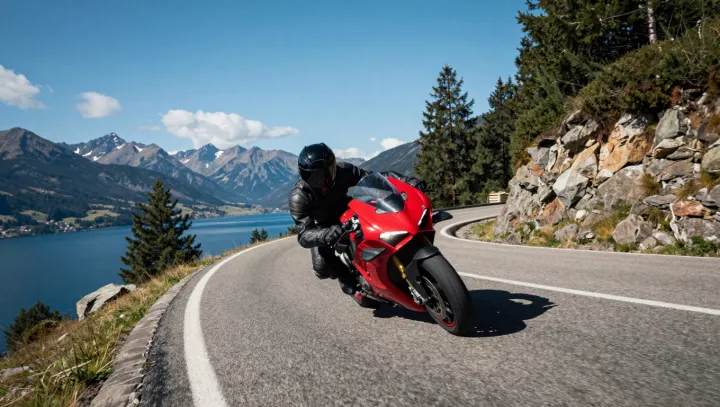
Stability on modern sportbikes is no miracle of rider skill; it is engineered into the machine. A compact inertial measurement unit sits at the core, tracking roll, pitch, and yaw dozens of times per wheel rotation, feeding traction control and cornering ABS that trim power or pressure before a slide can mature.
The real trick is that the bike now thinks faster than the rider. Gyroscopes and accelerometers model lateral acceleration and lean angle, so electronic control units can modulate throttle bodies and hydraulic brake circuits in milliseconds, holding a desired line even as the road surface breaks, ripples, or drops away under the tires.
Equally radical is the way old geometry has been reworked. Steeper rake, shorter trail, and stiffer aluminum frames should make a bike twitchy, yet computer‑aided finite element analysis and tuned flex zones let the chassis absorb midcorner hits while keeping the contact patch loaded and predictable.
Tires and suspension quietly finish the job. Multi‑compound rubber, steel belt construction, and precise carcass stiffness give high grip at full lean without overheating, while upside‑down forks and linkage‑type rear shocks, often paired with semi‑active damping valves, filter out high‑frequency bumps so the rider feels intent, not impact.