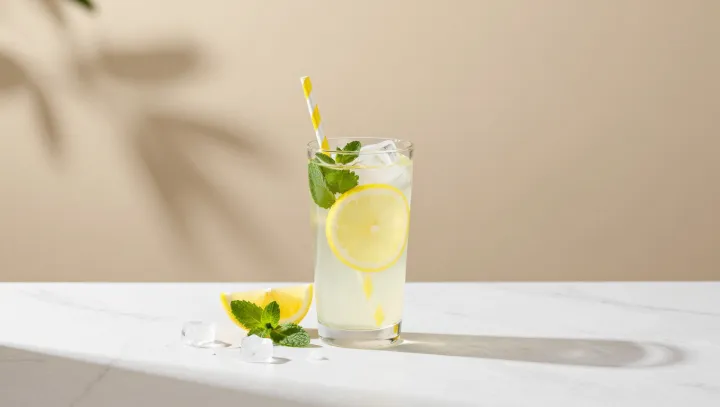
Plain ice water is not neutral to the brain at all; add two drops of lemon and the entire signal map shifts. On the tongue, citric acid activates sour-responsive taste receptors, but it also changes how sweet-sensitive receptors like TAS1R2–TAS1R3 fire in response to trace glucose already present in saliva. The brain then interprets the mixed firing pattern as brighter, almost sweetened, even though measurable sugar content in the glass has barely moved. A tiny chemical nudge, yet a very different neural code.
More striking is the effect on coolness and refreshment, which is less about taste and more about somatosensory wiring. Lemon’s volatile compounds stimulate the trigeminal nerve endings that track temperature and irritation, enhancing signals that cold water already sends through thermoreceptors such as TRPM8. That layered input reaches the insula and orbitofrontal cortex, regions that integrate taste, temperature, and reward, so the drink is tagged as crisper and more quenching than the same water without lemon. Your subjective relief is a constructed verdict, not a simple response to degrees on a thermometer.
There is also a quiet expectation effect baked into this chemistry. Because the brain has learned to associate citrus aroma with cleansing, calorie-light drinks, olfactory receptors primed by lemon oil bias reward circuits toward a sense of lightness and reset. Dopaminergic pathways do not wait for calories; they respond to predicted patterns, and lemon closely matches the template of a low-guilt treat. A few near-calorie-free droplets, and the glass in your hand becomes, neurologically speaking, a different beverage.