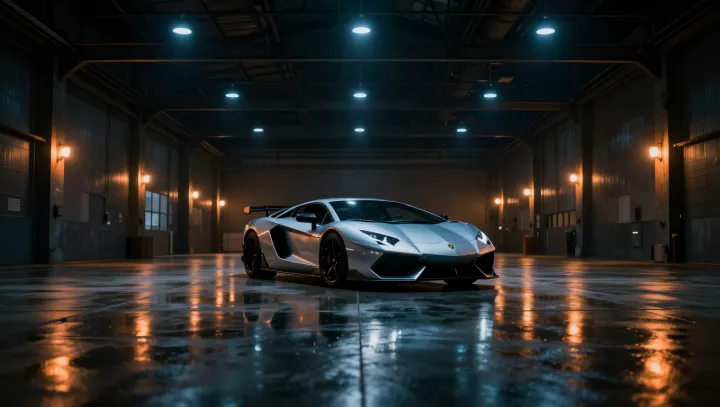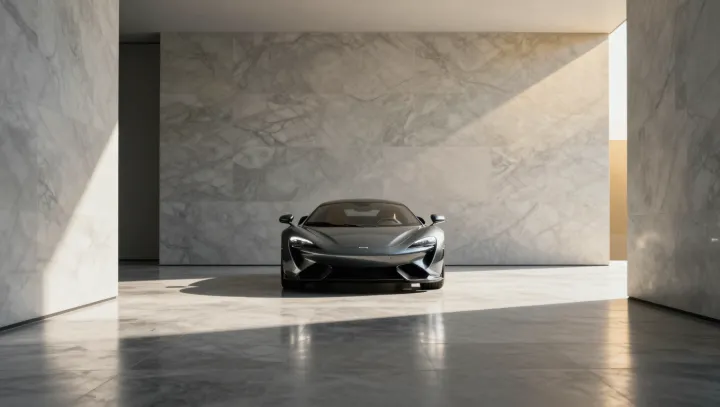
Empty space, not sheet metal, usually decides whether a parked car feels fast. Around every performance model, designers sculpt voids so that reflections race across the body while the vehicle itself does not move.
This priority is no aesthetic whim; it is visual physics applied to marketing. Human perception reads speed from gradients, contrast and directional cues rather than from horsepower figures or drag coefficient. Deep shadow under a high shoulder line, a tight greenhouse over swollen fenders, and negative surfaces carved around wheel arches create strong luminance contrast that the eye interprets as tension and potential energy. Where the body pulls away from the wheels, air appears compressed, so the car looks as if pressure is already building even at rest.
More radical still is how designers treat light as a kind of invisible bodywork. Daylight grazing along a sharp feature line behaves like a controlled highlight, turning a simple panel into a streak of motion. Gloss paint, glass and chrome are positioned to create rapid reflection flow, a visual vector field that pushes the gaze from front to rear in milliseconds. By hollowing out intakes, thinning roof pillars and exaggerating overhang shadows, studios leverage emptiness as a visual turbocharger, letting light do the talking while the parked car merely waits, looking ready to break its own frame.