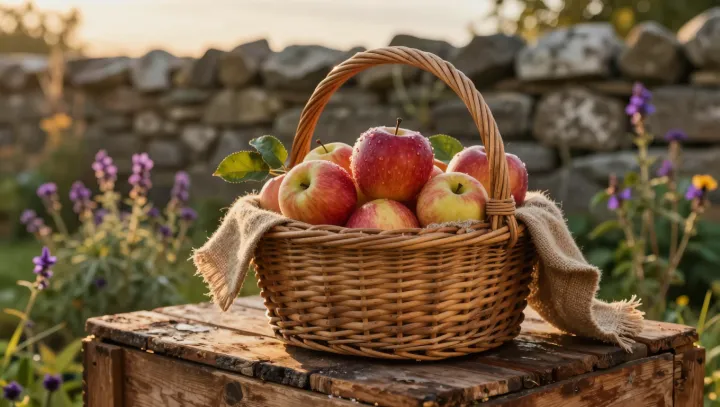
The rough burlap around a basket gets blamed for the wrong crime. It lets air pass. Its loose fibers admit air, while a sealed liner can hold water vapor near fruit whose skin is exchanging gases with its surroundings. Apples do not stop living after harvest. That distinction matters. You notice the change first at the surface, where dampness can turn a firm apple faintly yielding before decay announces itself.
Warmth does more damage. As temperature rises, cellular respiration speeds up, consuming stored sugars and producing carbon dioxide, water, and heat in a feedback loop that can quicken softening. Texture pays first. High relative humidity, especially with poor airflow, encourages condensation; that surface water invites microbial growth and interferes with the dry conditions that help fruit retain its bite. The effect compounds. Ethylene, the ripening hormone, can drive enzymatic activity, including pectin breakdown in cell walls.
Do not blame burlap. You can use its airflow to reduce stale, damp pockets, but only if the liner stays dry and the fruit is kept cool, with bruised apples removed before they emit more ethylene. Check it often. Avoid packing fruit so tightly that air cannot move between it. A basket near heat becomes a small incubator, whereas dry circulation limits condensation without halting normal ripening. The payoff is less waste. Would you fault the basket, or the conditions you left inside it?