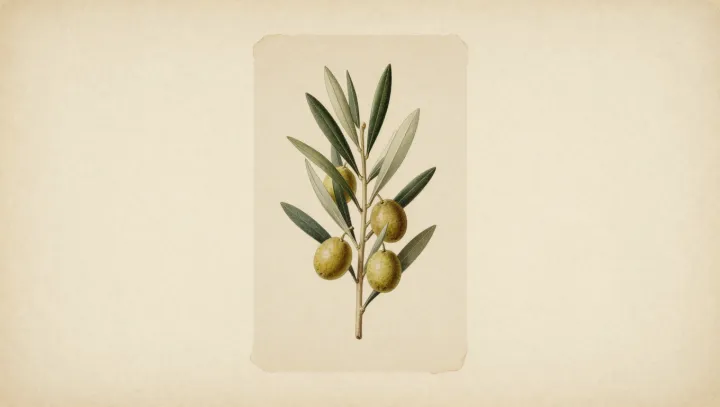
Green olives are a timing label, not a botanical category. On the branch, an olive begins with chlorophyll-rich skin, and its color shifts as ripening changes pigment chemistry rather than swapping one fruit for another. The jar can hide that simple fact. Harvest timing does the sorting.
The biology is more interesting than menu shorthand. Chlorophyll degradation is the named process that removes much of the green signal as fruit ripens, while carotenoids can become more visible and anthocyanins may accumulate in some cultivars, yielding purple or black tones. Think of the skin's pigment profile as a display controller changing pixels. Yet pigment metabolism, not code, runs the sequence.
Color alone is a poor witness. Some dark olives ripen naturally on the tree, but others are darkened during processing through oxidation and may be stabilized with ferrous gluconate, which means a black olive is not always simply a fully ripe one. Labels deserve sharper reading. The useful leap is not a smarter olive, but a smarter food label that separates harvest stage, cultivar, and processing method.