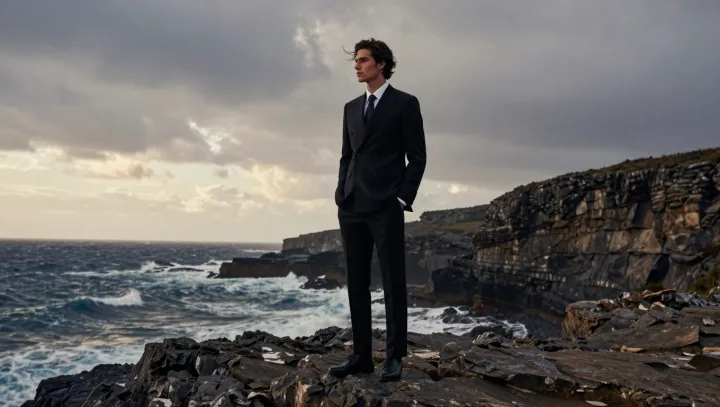
The coast gets too much credit. At the waterline, an orange sky can seem to rise from the shore itself. It does not. When the sun sits low, its light must cross far more air than it does overhead, and that extended route reshapes the spectrum before it reaches an observer.
Physics is less romantic. Rayleigh scattering sends shorter blue wavelengths outward more efficiently, while longer red and orange wavelengths persist along the line of sight. Near the horizon, optical depth rises sharply; the atmosphere becomes a selective filter, removing much of the blue from direct sunlight. Dust, smoke, sea salt, and water droplets can alter the result through Mie scattering, sometimes making the glow deeper or paler. They are modifiers, not authors.
That distinction matters because scenery persuades. A coast supplies a dark silhouette, open horizon, and reflective water, which make the color feel local; yet an inland plain, a desert road, or an aircraft window can stage the same optical drama when solar geometry and aerosols cooperate. The shoreline frames the event. The air performs it. By the time the last light touches the sea, color has endured a long atmospheric trial, leaving the coast illuminated but acquitted.