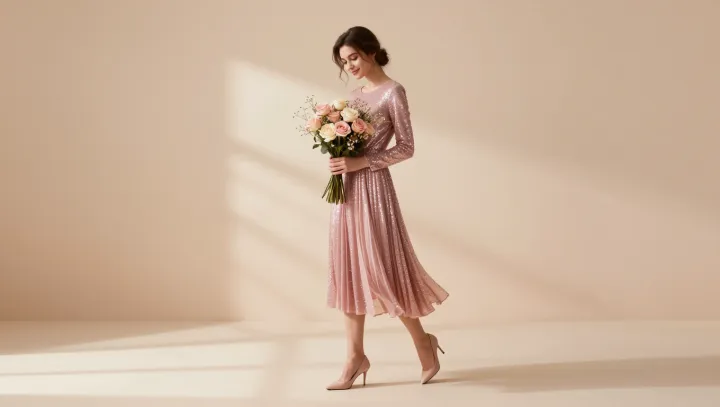
The flattering light is the less forceful one. Across a sequin field, a broad studio source reaches tiny tilted surfaces from many angles, while a hard spotlight sends a narrow beam that only a few facets can return toward the camera. Glare wastes the dress. It turns selected discs into white marks and leaves the surrounding pattern visually starved.
The surprise is optical, not cosmetic. Sequins behave as an unruly collection of microfacets, each governed by specular reflection: the angle of incidence must match the angle of reflection. A small source offers a strict geometric bargain, so only facets with the right orientation flare at once. A larger apparent source relaxes that bargain. More facets find a path back to the viewer, creating a fuller field of flashes rather than a handful of blinding hits.
Brightness is also a matter of restraint. When a spotlight pushes highlights beyond a camera sensor's dynamic range, detail vanishes into clipped white; the eye, too, reads such extremes as harsh interruptions. Diffuse illumination lowers peak contrast while preserving local luminance variation, which lets individual edges and color shifts remain legible. The garment does not merely reflect more light. It reveals more structure. Under that gentler arrangement, every small mirror gets its brief say, and none is loud enough to silence the rest.