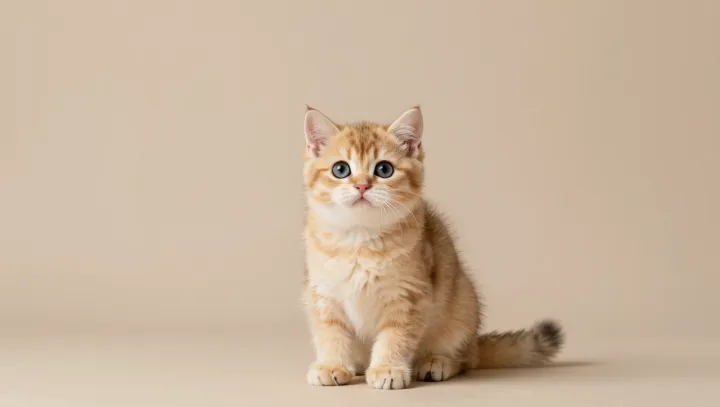
Ears can fool you. A kitten facing a faint sound may hold its pinnae forward and fix its eyes because auditory orienting and visual attention are active, even while the rest of its body has not decided whether the moment is safe. Look lower instead.
Posture carries the verdict. When the spine stays loose, paws rest without gripping, whiskers sit neutral, and the tail lies easy or moves softly, low muscle tone usually points to comfort rather than threat assessment. That distinction matters. The chest may breathe at an even pace, while weight shifts without a sudden retreat or a rigid freeze.
Do not crown the ears. During sympathetic arousal, the autonomic nervous system can sharpen gaze and rotate pinnae toward a stimulus, while flexed limbs, a tucked tail, a crouched trunk, or piloerection may show that caution is still running the show. Context breaks ties. Recent play, hunger, pain, temperature, and social history can alter the display, so a relaxed body should be read across several seconds, not from one frozen pose. You would not judge a friend by raised eyebrows alone; why judge a kitten that way?