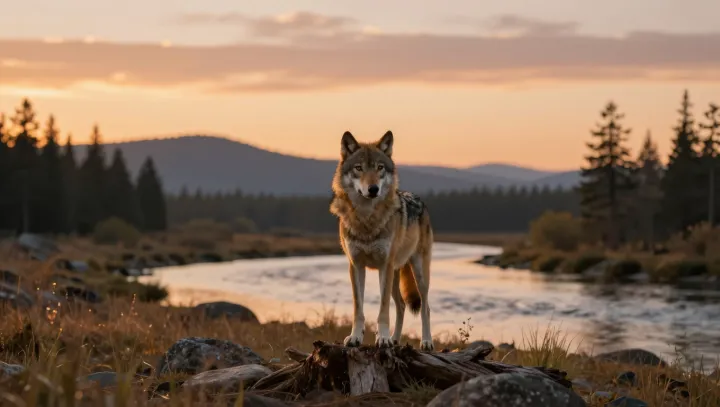
At sunset, the wolf's stillness is a watch, not a pause. Upright ears collect faint sound while an exposed bank or rise offers a broad acoustic field, where water, wind, and brush can be sorted rather than merely endured. Nothing here is idle; the animal is holding a listening position.
That quiet is tactical. A river corridor carries more than moving water: odor plumes travel along its edges, fold in cooler air, and arrive with clues about prey, rivals, or people. Olfaction does not operate as a simple nose-to-brain alarm. It is chemical sampling, strengthened when the wolf keeps its muzzle clear of dense cover and its body oriented toward the shifting current. The exposed vantage trades concealment for information. Often, it is the smarter bargain.
Stillness, then, is costly. Remaining visible can invite detection, and sunset compresses the margin between seeing and being seen; yet auditory localization gives the wolf a chance to distinguish a splash upstream from a footfall behind reeds before movement gives away its own position. The pose resembles patience only to human eyes. By the river, a wolf stands as if the fading light itself had asked a question.