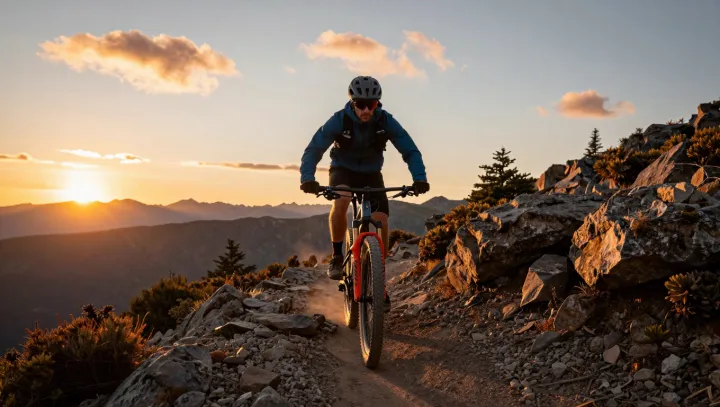
Loose stones skitter beneath a front tire, and the faster line starts with a refusal: do not bolt the bicycle to the rider's body. Let it move. On a rocky descent, a quiet torso and an active bike keep the center of mass steadier while the wheels follow the ground, instead of launching the entire system upward at each impact.
Stiffness is usually the costly mistake. Locked elbows, rigid legs, and a death grip turn small impacts into violent direction changes, reducing traction when the tire needs a reliable normal force. Stay balanced. Bent arms and legs create usable travel around the bicycle, allowing suspension kinematics, tire deformation, and body position to manage separate jobs. The wheels search for contact; the rider protects balance.
The trick is mechanical filtering, not bravado. Think of damping and mechanical impedance as a packet buffer in a high-speed network: sharp terrain inputs arrive fast, but the rider's mass should not process every signal at once. Let the chassis handle noise. As sensors, adaptive suspension, and rider telemetry become more common, the best descending skill may look less like force and more like intelligent bandwidth management.