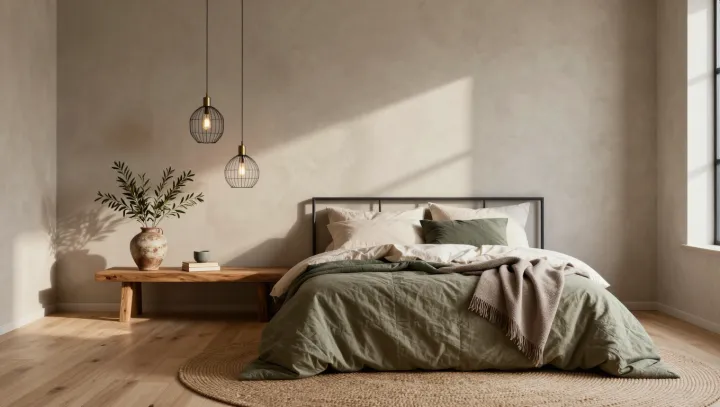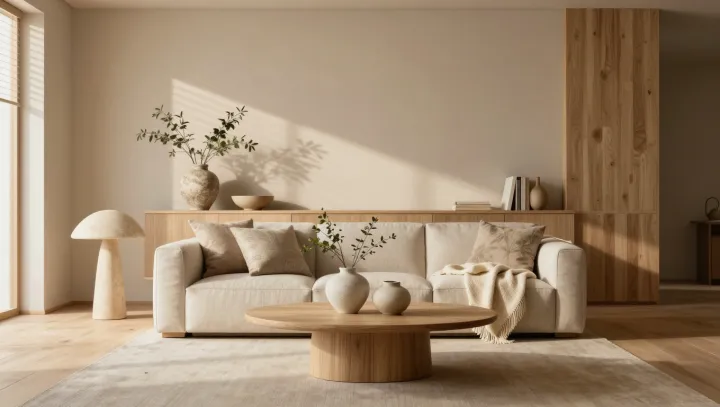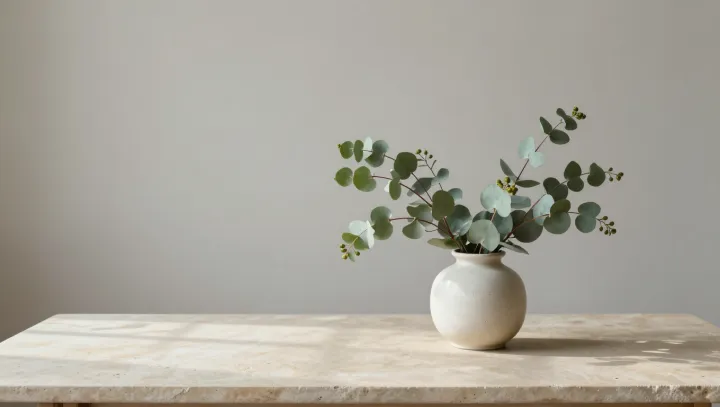
Against a pale wall, a few eucalyptus stems do more than decorate: their long, repeated lines reduce visual clutter, while gray-green leaves occupy a narrow band of color that asks little of the eye. The room loosens first. Where bright patterns compete, selective attention must sort edges and signals; here, the arrangement offers fewer competing targets, and that economy can lower cognitive load.
The color is doing quiet work. Desaturated greens sit nearer to neutrals than saturated reds or yellows, so they tend to produce less chromatic urgency, especially when surrounding surfaces remain restrained. Diffuse reflection matters too. Light scattered by leaves, matte ceramic, and a nearby wall softens sharp luminance contrasts; contrast sensitivity is not erased, but the eye faces fewer abrupt jumps. Nothing mystical occurs. The effect is a modest cue of order, not a cure for stress.
Even the spare vase earns suspicion. A crowded bouquet can turn foliage into visual noise, whereas three or four stems leave negative space intact and let the branching pattern read as a slow, legible gesture. This is not aromatherapy by another name; scent may alter a room's character, but visual calm begins before it. At dusk, the stems keep their small argument with the light: less to parse, more room to pause.