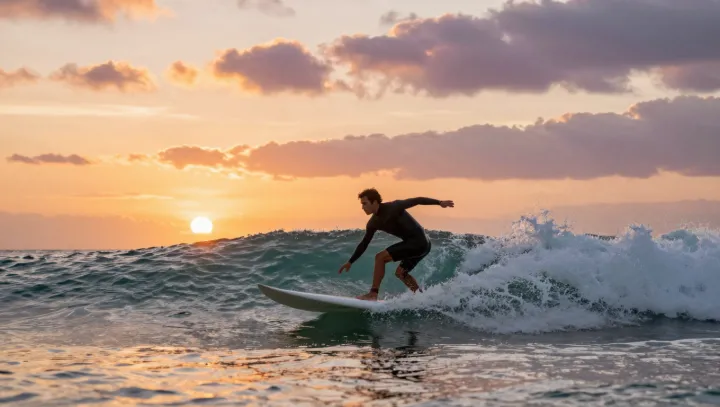
The low sun is a poor witness to force: it flatters the plume while hiding the timed shift that sends a board across a breaking face, where a fraction of a second decides whether the arc holds or washes away. Force arrives late. As the rider compresses and releases into the turn, the rail bites, the fins accept a changing angle of attack, and water is redirected rather than merely shoved aside.
Spray is not the point; it is the receipt, visible evidence that a disciplined line has converted forward motion into lateral force without giving away speed. Timing owns the turn. Before the section steepens, board trim, body position, and rail engagement must meet, allowing pressure beneath the tail to organize flow around the fin cluster and generate hydrodynamic lift. Preparation starts earlier. The approach sets the line, and a misplaced adjustment can leave the board skidding.
The enduring mistake is to mistake violence for command, because a hard stomp may throw water yet rob the board of the planing velocity that makes a full carve possible. Water keeps the score. Excess heel pressure stalls the tail; too little leaves the rail uncommitted, while measured rotation keeps the center of mass inside the arc and lets the board release its stored line as spray. That margin matters. At dusk, control looks almost like surrender.