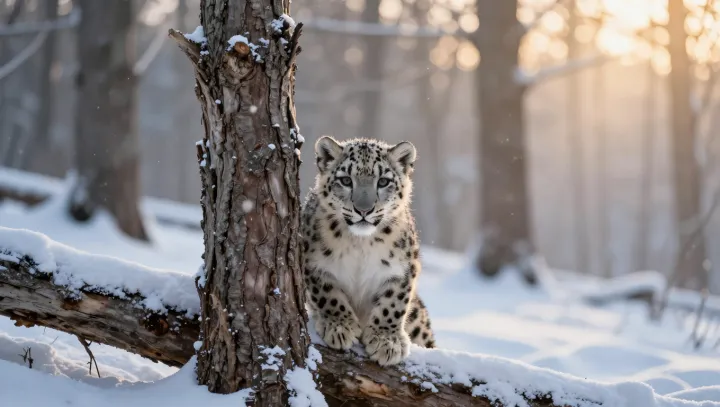
Softness is a visual trick. At the edge of deep snow, a cub's broad paw meets the surface not as a toy's rounded foot but as a load-bearing platform, spreading body mass across a larger contact patch while the grains yield below. The result is blunt. Less sinking follows when each step transfers force over more snow.
That design merits more respect than its cute outline receives. Ground pressure, expressed as force divided by area, drops when the plantar surface widens; on unconsolidated snow, lower pressure can prevent a small animal from breaking through at every stride. The arithmetic is unforgiving. Toes splay under load, increasing contact area and shifting force toward portions of the surface that still hold. This is mechanics, not magic. Fur can insulate the foot, and claws can improve traction on firmer layers, yet flotation supplies the central payoff: travel with less repeated effort.
Still, limits apply. Wet snow, a hard crust, and changes in snow density can alter how much a paw sinks or grips, so no foot turns winter into an easy passage. Snow changes the terms. But under deep powder, the cub carries a small lesson in biomechanics: survival may depend less on brute force than on where that force is allowed to land. Beneath the soft print lies a quiet calculation, soon covered by snow.