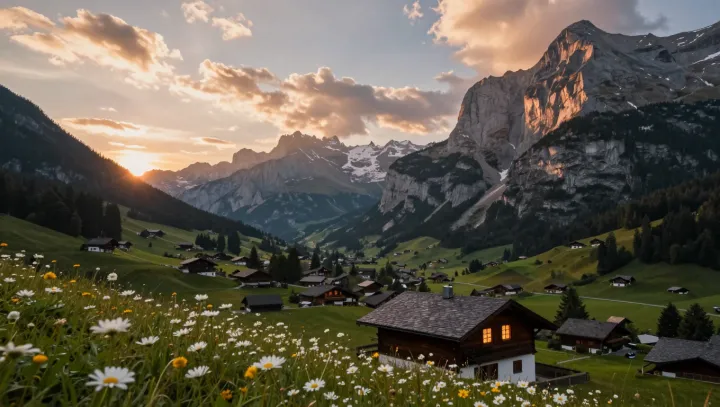
The view lies. Sunlight retreats from upper snowfields while a blue shade gathers in the basin, making the sheltered floor seem merely late to evening rather than first to freeze. Cold moves downhill. As radiative cooling strips heat from the ground after sunset, air touching that surface becomes denser and begins draining through gullies and hollows.
This is no minor quirk. A temperature inversion forms when the usual order of the atmosphere flips: instead of air cooling with height, the lowest elevations hold the coldest layer while slopes and ridges retain milder air above it. Houses can sit on opposite sides of that divide. One may face frost and frozen pipes, while another, only a short climb higher, needs far less heat. Cold-air pooling is the hidden accountant. It gathers the night chill in enclosed basins, especially where weak winds fail to mix the layers and cloudless skies let surface heat escape.
Elevation is not the whole story. In mountain country, a home perched above a hollow can be warmer than one below, because katabatic flow follows gravity rather than postal logic. The expensive mistake is assuming that lower means protected. At dusk, the valley floor may look calm beneath the fading light, yet it is already collecting a colder version of the night.