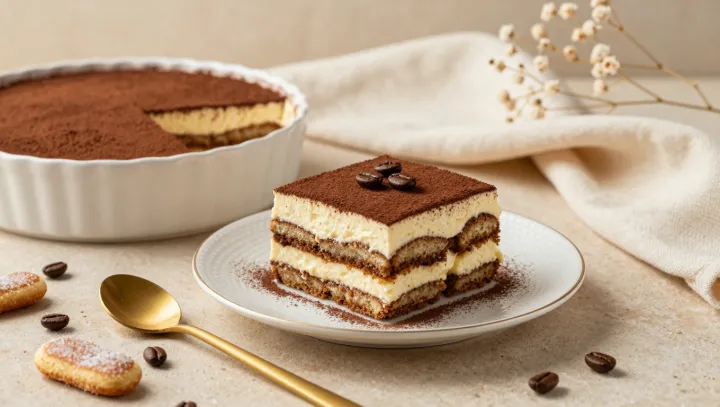
The cocoa dust is not innocent. Its bitter perfume arrives before the spoon, while sugar, fat, and coffee flavor converge in a dessert shaped by tradition, not a laboratory. That convergence can turn a daily slice into more than a treat: a repeated cue package read by the brain's reward circuitry.
The loop is the product. Through Pavlovian conditioning, the sight, smell, and timing of dessert can acquire incentive salience, so anticipation itself starts pulling attention toward the plate. Dopamine is not pleasure. Yet dopaminergic signaling helps assign motivational value, and repeated pairing of a rich taste with a familiar coffee note may strengthen cue-triggered wanting even when hunger is low. Think of it as a background process: sensory cues ping reward prediction, then the habit launches before deliberation catches up.
Frequency is the hidden lever. One serving does not diagnose a problem, but repetition compresses choice into routine, especially when a predictable after-meal moment becomes the trigger. The relevant mechanisms include conditioned reinforcement and postprandial glucose response, not a moral flaw or a failure of will. Break the pairing, vary the ritual, or skip the automatic slice. If everyday foods are increasingly assembled as cue stacks, appetite may become less a decision than a system running itself.