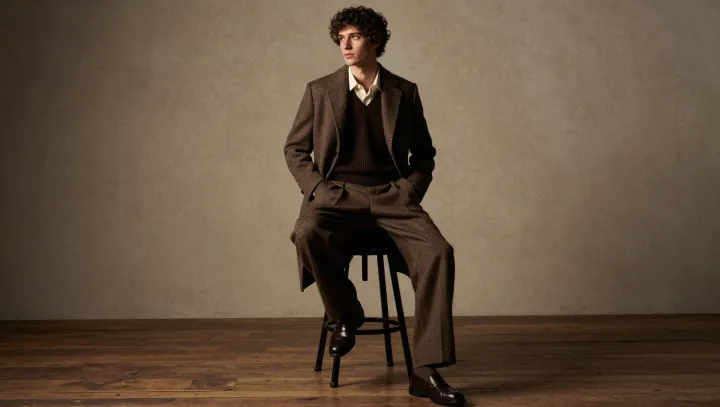
Chairs judge without mercy. Cloth at a seated hip must absorb pelvic rotation, thigh spread, and a shorter torso-to-knee distance; a standing body asks far less from the same seams. The first fold gives the verdict: a jacket or trouser may appear immaculate upright, then bind, pull, or reveal surplus fabric when weight settles.
The hidden problem is geometry. Sitting changes more than silhouette: the pelvis tilts, the abdomen compresses, and the femur drives outward, redirecting tensile stress through the waistband, inseam, seat seam, and jacket front. Static fitting misses this. Tailors must calculate ease allowance with restraint, because extra volume can prevent strain while also producing puddling, gaping, and a collapsed line once the wearer rises.
Precision, not looseness, is the answer. Crotch depth must match the seated pelvis; rise must support movement without climbing; sleeve pitch and armhole shape must allow the shoulders to reach forward without dragging the coat upward. A relaxed pose is therefore the stricter examination, where cloth becomes an argument between structure and flesh. On the chair, the mannequin loses its case.