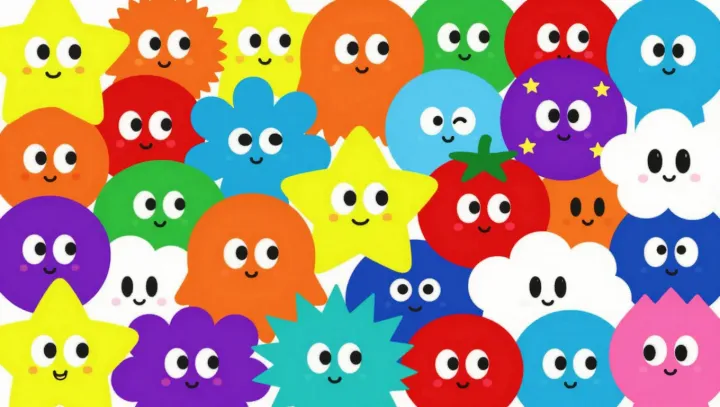
Roundness cheats first. A pair of oversized circular eyes held inside a soft silhouette can make a drawing seem safe before its story supplies a single moral cue. Older than taste. It works before language. In visual perception, curved contours often trigger a baby-schema response: viewers associate them with infancy, low threat, and care.
Sharpness is a faster warning. Triangles, slanted brows, and narrow pupils steer attention toward points, where the eye expects edges, weapons, teeth, or speed. The signal arrives early. Animation studios exploit that bias because audiences make rapid judgments at thumbnail size, when costume, dialogue, and backstory have little room to intervene. The face becomes a warning. Configural processing lets viewers read these relationships as one facial pattern rather than isolated marks; amygdala-linked threat processing can then tilt appraisal toward vigilance. A villain need not snarl.
Unevenness is the wild card. A lopsided grin or mismatched eyes disrupt symmetry, a cue often tied to stable identity, and the brain starts forecasting whether the figure will stumble, joke, or strike. Not a fixed law. Culture, genre, color, and context can reverse the reading, though the first hunch often frames what follows. Suspense often follows. An irregular outline beside otherwise childlike features makes that hunch feel unstable, not merely strange. Here shape language earns its force: it compresses character into priors before dialogue, motion, or plot can contest the verdict. On the still page, the face has already moved.