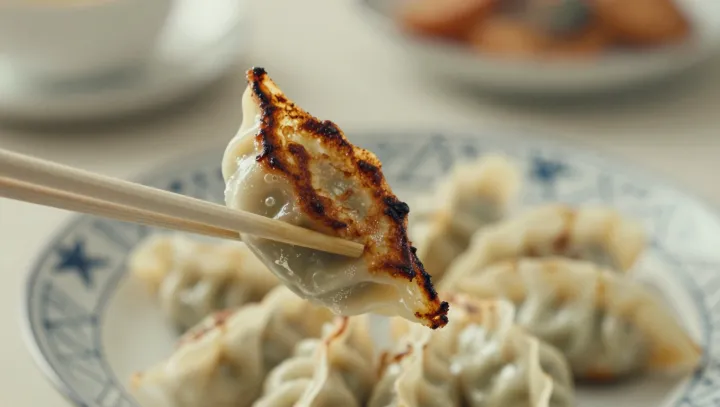
More oil misses the point. A dumpling's tenderness depends less on added fat than on where its water resides, because liquid released by vegetables can soak the wrapper before cooking begins. Restraint makes better filling. Salt draws moisture from chopped vegetables through osmosis, giving the cook a chance to remove the surplus without stripping away everything that makes the filling succulent.
Gentleness beats brute force. Once salted vegetables have softened and released liquid, a light squeeze in clean hands or a clean cloth removes water that would otherwise collect in the mixing bowl. Damp is the target. Vegetables pressed until almost dry can leave the filling short of the moisture it needs, while vegetables left dripping can turn wrapping into a struggle against slippery seams. Texture provides the evidence. The squeezed pieces should remain supple, with no puddle forming beneath them, rather than resemble a compact wad of exhausted vegetable fibers.
Fat cannot repair poor drainage. Oil supplies lubrication and richness, but it does not remove excess water or prevent that water from migrating into the dough while filled dumplings wait. Timing deserves equal attention. Mix the drained vegetables with the remaining ingredients near wrapping time, since further seasoning can encourage additional liquid release, and avoid leaving assembled dumplings standing unnecessarily. Cooking completes the bargain. As starch gelatinization sets the wrapper and proteins firm in a meat filling, retained moisture supplies succulence; the surplus has already been left behind. The reward rests inside: a tender center, its wrapper still holding the boundary.