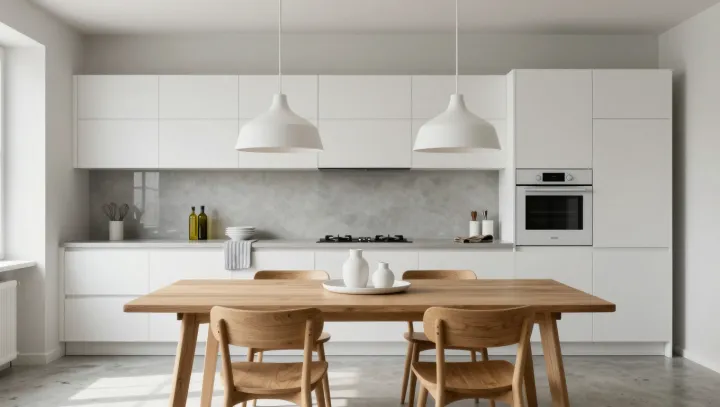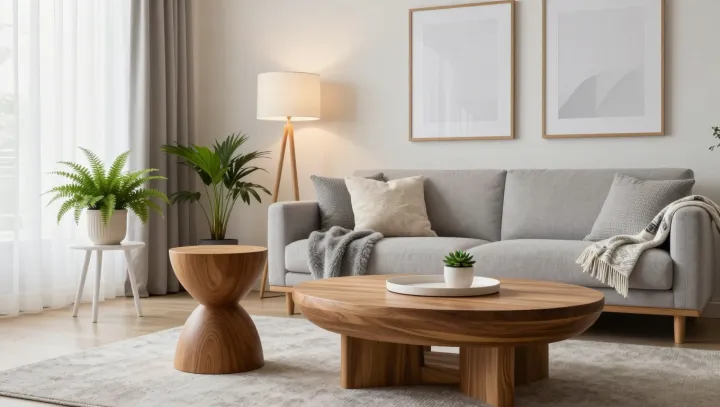
Empty space does work. In Japanese minimalist interiors, the distance between a chair, a wall and a window can matter as much as the objects themselves. Reduction misses the point. What shapes the room is not merely a smaller inventory, but a spatial composition in which unoccupied areas give furniture, light and movement their place.
Restraint needs careful placement. Negative space, the unoccupied area surrounding an object, changes how that object is perceived: a low table beside an open stretch of floor reads differently from the same table wedged between cabinets, even when its dimensions remain unchanged. Emptiness is not uniform. Traditional Japanese interiors offer concrete examples through sliding partitions, floor seating and display alcoves, which allow boundaries, uses and points of attention to shift without requiring every available surface to carry furniture or decoration for its own sake.
Comfort still outranks purity. A room stripped of storage or adequate seating may photograph neatly while serving its occupants badly, so the more useful lesson is to protect sightlines, leave passages clear and let daylight reach surfaces where its changing intensity can be noticed. Possessions need not vanish. Rather than treating every object as an intrusion, this approach asks whether its position supports the room's daily use and visual balance, allowing a worn chair or a single bowl to remain while the interval beside it holds the afternoon light.