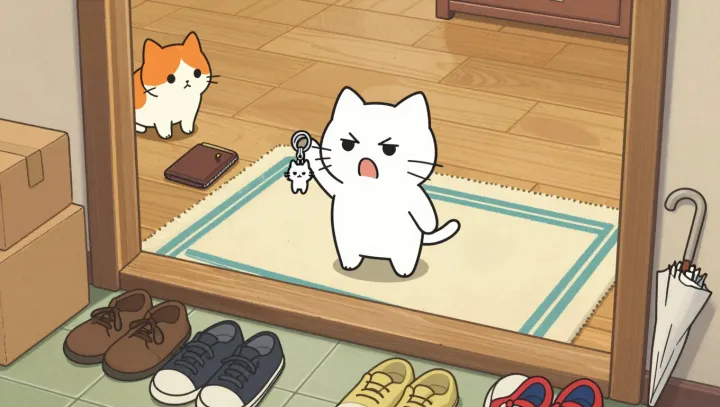
The scowl proves little. That white cat may resemble a landlord inspecting overdue rent, but its apparent displeasure is a human interpretation, not a reliable reading of feline emotion. Appearance invites anthropomorphism, the attribution of human traits to animals, while ear position, tail movement and muscular tension offer more useful evidence.
The body deserves priority. Ears held forward or moving toward sounds often indicate attention, whereas ears flattened backward can accompany fear, defensive behavior or irritation, depending on what else the cat is doing. Context changes the reading. An upright tail often accompanies a friendly approach, while forceful tail lashing can signal agitation; neither posture supplies a complete emotional diagnosis without the rest of the animal. Fur adds another clue. Piloerection, the raising of hairs, can make a frightened or highly aroused cat appear larger, especially when it occurs alongside an arched back or stiffened stance.
Stillness is not consent. A cat that crouches tightly, holds its body rigid or tries to retreat may need distance, even if its face looks no different from the expression that amused its owner moments earlier. Patterns beat isolated clues. A loose body and unhurried movements support a different interpretation from a tense crouch, but sudden, persistent changes in behavior warrant veterinary attention because discomfort can alter posture and social responses. Give uncertainty some space. Rather than reaching toward a cat whose signals suggest unease, let it choose whether to approach; beneath that supposed landlord's frown, the tenant may simply want the room to itself.