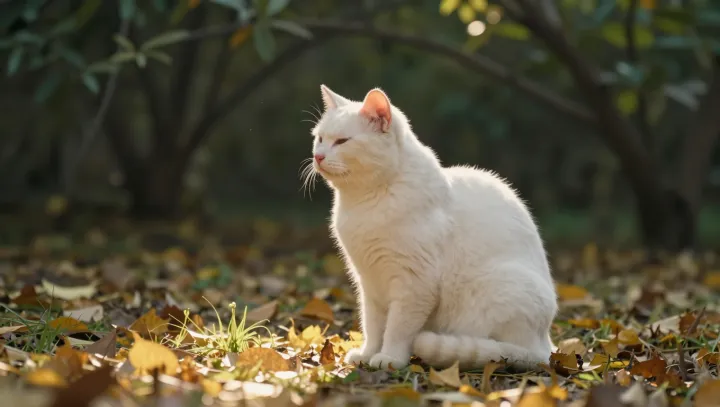
Cats lack sweetness entirely. Beneath their reputation for exquisite sensory equipment sits a genetic omission: a nonfunctional taste-receptor gene that prevents sugar from producing the sweet sensation familiar to humans. Perfection has its exceptions. The same animal that detects faint movements and hunts in dim light cannot taste the sweetness of a spoonful of sugar.
The defect is specific. In mammals that perceive sweetness, the receptor proteins T1R2 and T1R3 join into a heterodimer, a two-part molecular detector that responds to sugars and other sweet substances. Cats lack that partnership. Their Tas1r2 gene is a pseudogene, carrying disabling changes that prevent it from supplying a functional T1R2 protein, although the gene for T1R3 remains intact. One component cannot substitute. Without the usual pairing, the tongue lacks the standard receptor machinery for sweet taste, a finding supported by genetic research and behavioral tests of cats' responses to sweetened liquids.
Evolution owes no completeness. As obligate carnivores, cats depend on nutrients supplied by animal tissues, so detecting sugar may have offered less advantage than it did to animals eating fruit or other carbohydrate-rich foods. That explanation needs restraint. A meat-based diet helps explain why losing sweet detection could persist, but does not prove exactly which evolutionary pressures first produced the disabling mutations. Dessert interest proves little. A cat approaching ice cream may be responding to fat, protein, smell or texture rather than sweetness, leaving the human observer to mistake appetite for a shared pleasure. The saucer holds two experiences.