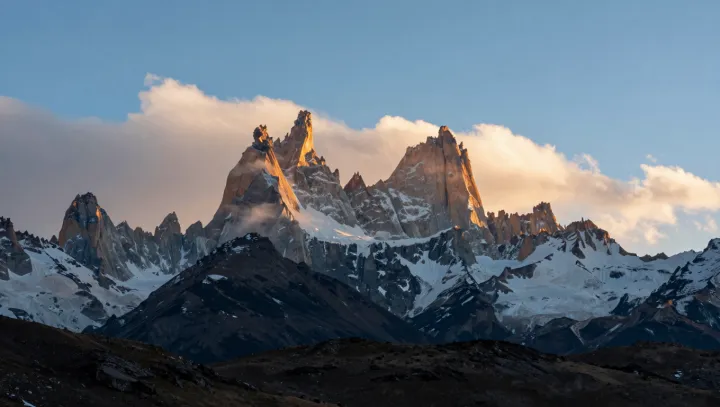
Patagonia's divide is atmospheric. Across the Andes, forests dripping with Pacific moisture give way to an eastern steppe where rainfall cannot sustain the same dense growth, despite the regions sharing a mountain border. Height decides the difference. The mountains intercept prevailing westerly winds, forcing moist air upward before it can carry much of its water farther east.
The west collects first. As Pacific air climbs the slopes through orographic lift, falling pressure allows it to expand and cool, a process known as adiabatic cooling that helps water vapor condense into cloud droplets. Rain follows the ascent. Where moisture arrives repeatedly, western Patagonia supports temperate rainforests, with dense vegetation benefiting from the generous supply rather than from tropical heat. Latitude tells only half. Although Patagonia lies far from the equator, its ocean exposure and mountain barrier allow forests to flourish in places where a simple northward or southward reading of climate would miss the explanation.
The east inherits scarcity. After losing moisture on the western slopes, air crossing the crest can descend and warm, lowering its relative humidity and making further rainfall less likely on the sheltered side. This is rain shadow. Much of eastern Patagonia consequently supports grasses and shrubs rather than closed forest, though local precipitation varies with elevation, exposure and distance from the mountains. The boundary resists neatness. Not every valley follows the same pattern, but the regional contrast remains: beneath a shared sky, one slope receives the water that the other must live without.