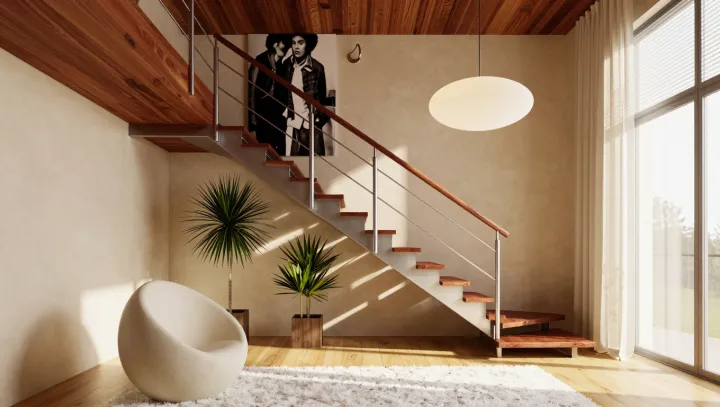
Small furniture can crowd. A room scattered with stools, side tables and narrow shelving may offer less apparent breathing room than one furnished with a substantial sofa and a single storage cabinet. Size is not everything. Each separate object adds edges and interruptions, which can make the same floor area appear busier even when the individual pieces occupy relatively little space.
The eye prefers order. In figure-ground perception, objects are distinguished from their surroundings; when furnishings overlap or compete with one another, the room's boundaries and open surfaces can become harder to read. Fewer pieces simplify that. A long cabinet gathers storage into one continuous form, while several little units distribute handles, legs and gaps across the wall, creating more visual clutter. Empty space gains definition. Rather than appearing as leftover slivers between possessions, an unobstructed stretch of floor becomes a visible part of the room, giving the furniture room to breathe.
Bigger still needs limits. A sofa that blocks a doorway or projects into the walking route defeats the argument, because usable space depends on circulation paths as well as what the eye perceives. Fit outranks sheer bulk. Choose pieces that consolidate functions, such as a storage bed or a cabinet replacing several racks, while leaving doors, windows and everyday movement unobstructed. Height changes the effect. A low-backed sofa may preserve sightlines where a tall armchair interrupts them, so footprint alone cannot settle the choice. The room stops stuttering. Between its few settled objects, the floor can finally finish a sentence.