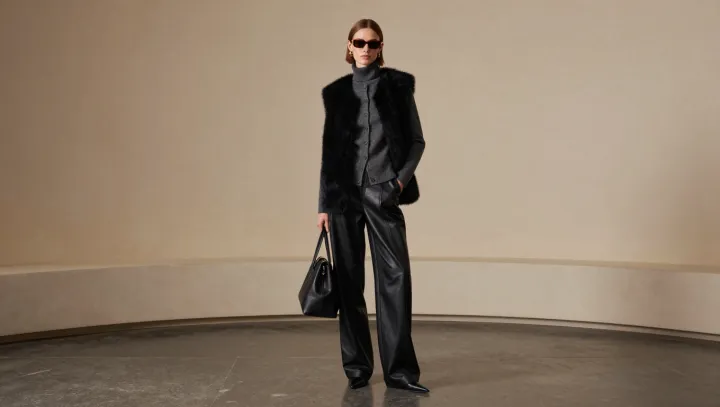
More fabric proves less. A fluffy vest above a sleek leather skirt can create greater visual depth than several similar layers because the eye encounters two distinctly different surfaces, rather than repeated versions of one. Contrast does the work. Where raised fibers scatter light and cast tiny shadows, smooth leather can gather highlights into brighter, more defined patches that describe its curves.
Texture earns its space. Through diffuse reflection, the vest's irregular surface sends light in many directions, while specular reflection can give finished leather a more concentrated sheen, depending on its coating and the lighting. Neither effect requires bulk. Not merely decorative is this difference: it supplies separate cues about surface roughness and shape, allowing the eye to distinguish the garments even when their colors closely match. Similar fabrics risk merging. Although folds, hems and exposed edges can still establish depth, additional layers with comparable finishes may offer fewer changes in how light behaves.
Restraint makes contrast stronger. A plush upper half and a cleaner skirt outline introduce a second distinction, between apparent volume and a more continuous contour, so the outfit gains structure without needing another garment. Color can step back. Keeping shades close lets texture carry the composition, while a restrained shirt and unobtrusive accessories leave the difference between pile and polish easy to read. More is not richer. At the meeting of the vest's soft edge and the skirt's reflected light, the outfit finds room to breathe without acquiring another inch of cloth.