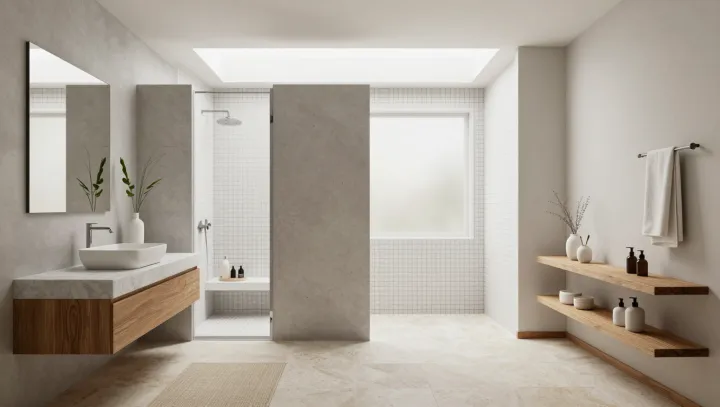
More storage can backfire. A cabinet that swallows every bottle may clear the sink temporarily, but if returning toothpaste requires rearranging other items, the counter becomes its unofficial home. Convenience deserves more respect. In a small bathroom, the useful question is not how much a cupboard holds, but whether everyday objects can return to their places without a minor excavation.
Reach beats sheer capacity. Point-of-use storage, a term used in workplace organization, offers a domestic lesson: keep frequently used supplies beside the activity they support, rather than wherever space happens to remain. Ergonomics matters here, too. A toothbrush holder near the basin, an accessible towel hook and a shallow drawer for grooming tools reduce the reaching and rummaging that poorly positioned storage demands. Restraint keeps this workable. The arrangement fails when every spare bottle joins the daily lineup, so reserve accessible positions for current essentials and move replacement supplies to a separate cupboard or bin.
Empty space earns its keep. A clear patch beside the sink makes wiping easier, while a crowded tray can become another obstacle if it must be lifted whenever the surface needs cleaning. Small adjustments come first. Before buying another organizer, remove unused products, check expired items and test whether the objects used most often can be retrieved and replaced without shifting anything else. Order should feel effortless. The room need not conceal every trace of living; sometimes its quietest achievement is a toothpaste tube resting exactly where a hand expects to find it.