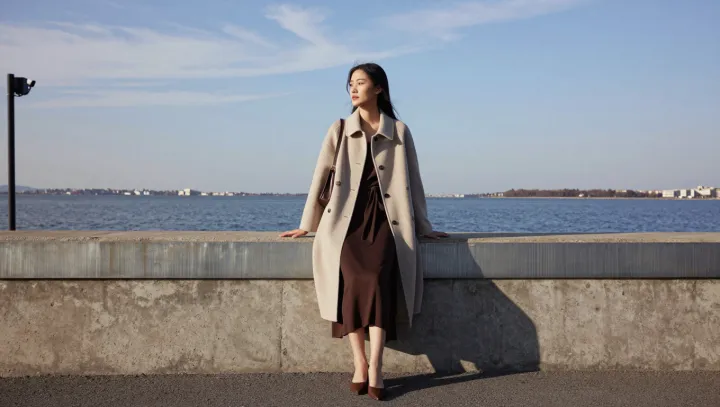
Timelessness comes from tension. A trench coat over a long dress looks composed when its tailored shell frames the softer garment beneath, rather than swallowing it in an uninterrupted column of fabric. Length is not the enemy. The trouble begins when both layers conceal the waist, carry similar weight and finish without a readable distinction.
The waist deserves authority. A belt tied at the natural waist, or slightly above it, establishes a division between torso and skirt that can make generous fabric feel intentional rather than cumbersome. Tightness is no substitute. Cinching too firmly can bunch the coat, especially when a gathered dress already places extra material beneath the belt. Texture does quieter work. Cotton gabardine, with its firm diagonal weave, holds the coat's outline while a fluid dress cut on the bias can fall and move independently underneath. Contrast need not shout. A matte trench against a subtly lustrous dress separates the layers without requiring competing colors or decorative detail.
The hem needs daylight. A dress extending a few inches below the coat makes the layering legible, while an open front can reveal its length when the two hems sit closer together. No measurement guarantees elegance. The useful test is whether the dress remains visible in motion and whether its skirt clears the coat without catching or collecting underneath. Shoes should leave breathing room. With the waist established and the fabrics moving separately, the coat becomes a frame; below it, the dress supplies the unfinished line.