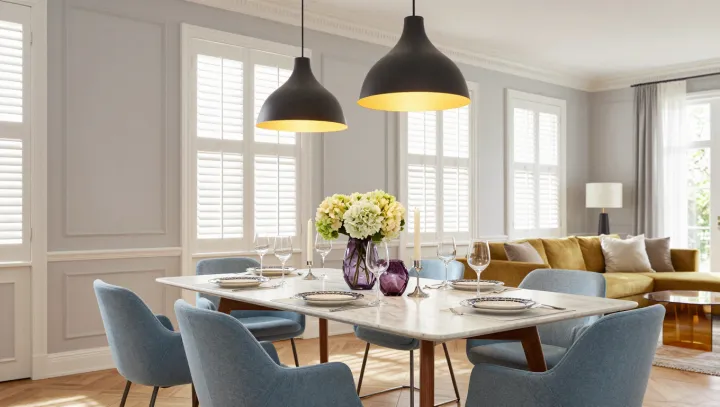
White paint is overrated. In a living room starved of daylight, even pale walls can look gray because they reflect only the light that reaches them, rather than producing any themselves. Brightness needs a source. Through diffuse reflection, painted surfaces scatter incoming light in many directions, but an empty supply leaves little to scatter.
One ceiling fixture disappoints. When light falls mainly downward, the floor may be adequately lit while walls and corners remain dark, making the room feel smaller than its dimensions suggest. Spread the light instead. Combine general illumination with a shaded reading lamp and a wall-directed fixture, placing them at different heights so that useful light reaches both occupied areas and the room's boundaries. The walls deserve attention. A floor lamp aimed toward a pale ceiling can soften shadows through reflected light, while separately controlled lamps let the room support reading or conversation without relying on one glaring overhead bulb.
Mirrors are not magic. Their specular reflection redirects light along predictable angles, so a mirror helps most when its position catches a window or illuminated surface rather than reflecting a dark doorway. Test the viewing angle. Move a mirror before mounting it, checking from the sofa that it reflects brightness without sending a bare bulb or direct sunlight into anyone's eyes. Restraint beats polished clutter. A glass tabletop or satin-finished cabinet can redistribute available light, but excessive shine creates glare rather than comfortable brightness; the better room lets its walls glow while its lamps quietly recede.