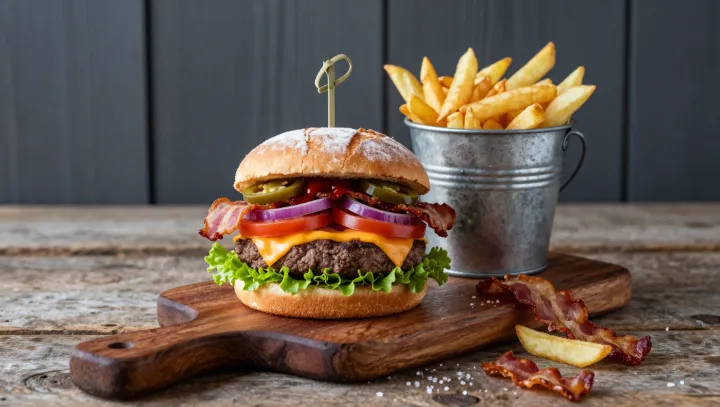
Fame can season dinner. A burger that attracts little notice can become an object of desire when online approval supplies what its unchanged recipe cannot: an audience prepared to want it. Popularity becomes persuasive evidence. Not because the patty has improved, but because visible enthusiasm offers a shortcut for judging something that cannot be tasted through a screen.
The crowd sells certainty. Psychologists call this social proof: when quality is difficult to assess, other people's choices can become evidence about what deserves attention or money. Repetition strengthens the invitation. Through informational cascades, successive customers may follow earlier choices rather than rely on their own information, allowing apparent consensus to grow without equivalent growth in independent judgment. A queue becomes advertising. Photographs, recommendations and visible demand can reinforce one another, making a familiar lunch feel like an experience whose value includes being able to say that one was there.
Attention is no verdict. A widely shared post establishes exposure, not culinary superiority, and a crowded counter cannot reveal how many customers arrived from curiosity rather than conviction. Expectations can color experience. Research on consumer perception suggests that contextual cues can influence enjoyment, although that does not establish that every viral burger tastes better to those who buy it. The distinction matters commercially. Restaurants can gain an audience from borrowed enthusiasm, but repeat business still asks whether the meal rewards the trip; beneath the photograph, the burger waits to be judged without its crowd.