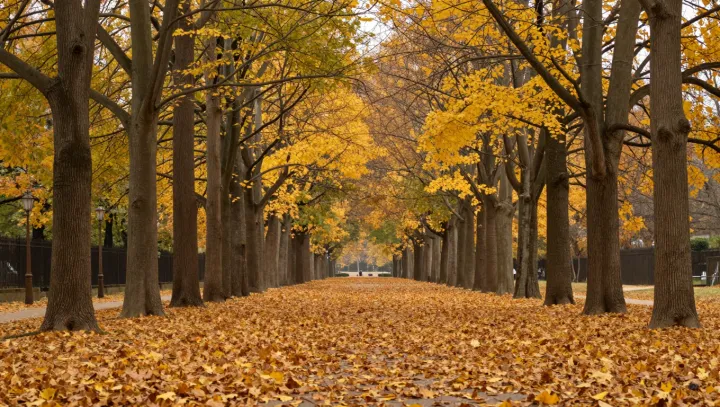
Autumn gold is disclosure. The yellow in fallen leaves usually comes from carotenoids, pigments already present during the growing season but concealed by the stronger green of chlorophyll. Green steals the attention. Only when chlorophyll breaks down does the familiar golden carpet reveal colors that helped the living leaf capture light and manage excess solar energy long before it fell.
The retreat is organized. As shortening days and seasonal conditions trigger leaf senescence, trees dismantle parts of their photosynthetic machinery and recover nutrients, including nitrogen, before releasing leaves they will no longer maintain. Yellow survives the withdrawal. Carotenoids generally persist longer than chlorophyll during this process, allowing yellow and orange tones to become visible, although their intensity varies with species, weather, and the condition of each leaf. Not every color waits. Reds often involve anthocyanins made during autumn, rather than pigments merely uncovered, so the explanation for a yellow birch leaf cannot simply be extended to every scarlet maple.
The carpet keeps changing. Once leaves reach the ground, continued pigment degradation, moisture, sunlight, and microbial activity alter their appearance, gradually replacing much of the yellow with the browns associated with decay. Gold is borrowed time. Before that fading, a fallen leaf offers a brief view of chemistry formerly hidden beneath green, its exposed pigments marking the interval between the work of a living canopy and the slower work of decomposition.