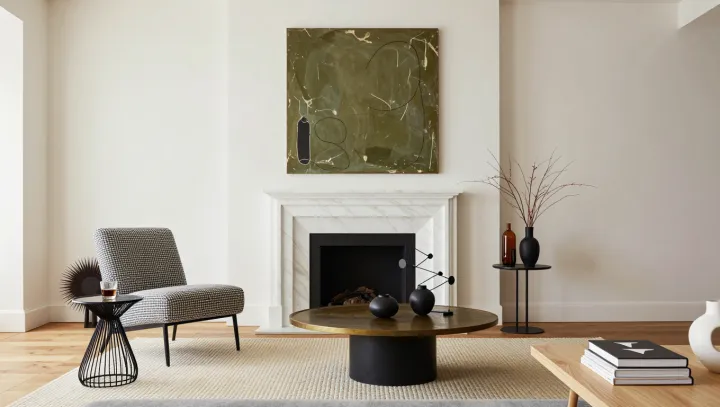
A crowded mantel undercuts the fireplace. When frames, candles and ornaments compete across the shelf, the eye encounters a collection of objects before it registers the structure beneath them. Empty space restores authority. With fewer interruptions along its upper edge, the fireplace can reveal the proportions, masonry and depth that decoration so often conceals.
Restraint is not sterility. In design, negative space gives an object room to register, while visual hierarchy establishes what receives attention first; both help explain why a single substantial vase can serve a mantel better than several unrelated trinkets. Scale matters more than quantity. A broad mirror or one generously sized artwork can relate to the width of the surround, whereas numerous small pieces may fragment that relationship into competing points of interest. Materials deserve their breathing room. Against an uncluttered shelf, the grain of timber or veining of stone becomes easier to notice.
Editing beats buying more. Start by clearing the shelf, then return only pieces whose size, shape or personal meaning justifies their presence, leaving enough exposed surface for the mantel itself to remain legible. Symmetry is not compulsory. One object placed off center can work with artwork above it, provided the arrangement feels balanced from the room's usual seating positions rather than merely from close range. Safety still sets limits. Keep combustible decorations away from heat and follow the fireplace manufacturer's clearance requirements, even when an arrangement looks attractive. The room grows quieter. What remains is not an empty shelf, but a fireplace finally allowed to hold the room.