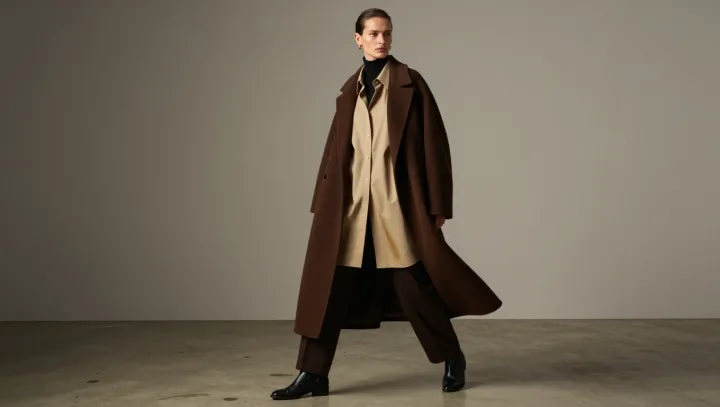
Brown makes warmth persuasive. Before a coat stops a draft, its chestnut or cocoa surface can suggest wood, leather and other familiar comforts, although those associations do not establish its insulating performance. Color is no furnace. What keeps the wearer comfortable is a combination of trapped air, fabric thickness and construction that limits heat loss.
Material deserves the scrutiny. Wool's natural crimp helps fibers hold pockets of air, which reduce thermal conduction, while a tightly woven outer fabric can restrict the air movement responsible for convective heat loss. Weight alone proves little. A heavy coat with open cuffs or a loose neckline can admit drafts, whereas a lighter insulated design with effective closures may retain heat better in comparable conditions. Fit carries consequences, too. Enough room for a sweater helps preserve insulating loft, but excessive gaps invite moving air, and compressed layers lose some of their ability to trap it.
Brown earns its place visually. Camel can soften the contrast against cream knitwear, while chocolate offers depth beside charcoal trousers; neither pairing needs a claim about superior insulation to justify its appeal. Texture strengthens the effect. A brushed wool surface scatters light differently from smooth leather, giving the same general shade a softer appearance, although a fuzzy finish alone cannot establish warmth. Sunlight complicates the picture. Darker surfaces can absorb more solar energy, but exposure, wind and fabric properties prevent that effect from becoming a dependable winter strategy. Beneath the brown, warmth remains invisible.