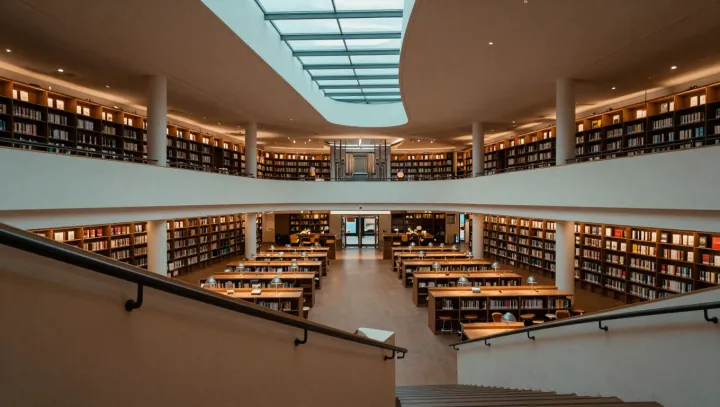
Brighter can mean harder. When a library lamp throws a reflection across a page, the added light can make printed words less distinct, even though the desk looks better illuminated. Brightness is no guarantee. What matters is the contrast reaching the reader's eyes, not simply how much light falls on the book or how brilliantly the ceiling shines.
Glare cheats the eye. On glossy paper, specular reflection sends light preferentially in one direction, which can place a bright image of a lamp or window directly over the text. The ink stays unchanged. Yet reflected light can wash across its appearance, narrowing the visible difference between dark letters and their lighter background until small strokes become difficult to separate. Eyes scatter light, too. When a bright source enters the field of view, scattering within the eye can create disability glare, reducing perceived contrast even without a conspicuous reflection on the page.
Better lighting requires restraint. A library can provide ample reading light while shielding lamps, diffusing their output, and arranging desks so that windows do not produce reflections along a reader's viewing angle. Position often beats power. Moving a lamp sideways or tilting a book can shift a reflection away from the words, while matte paper generally produces less concentrated reflection than glossy stock. Darkness is no cure. Readers still need sufficient illumination, but the most hospitable desk may be the one whose light leaves the least trace on the page.