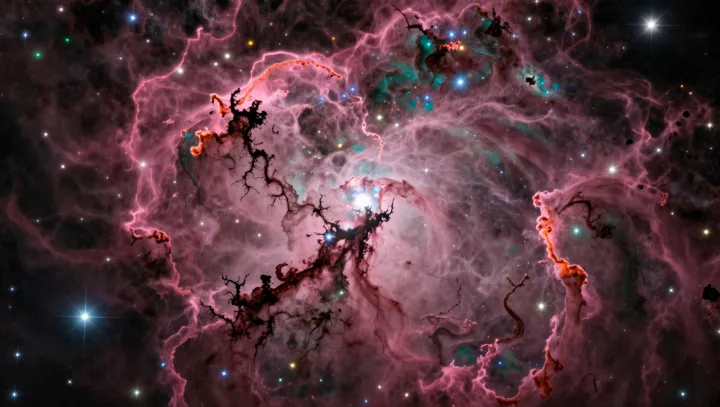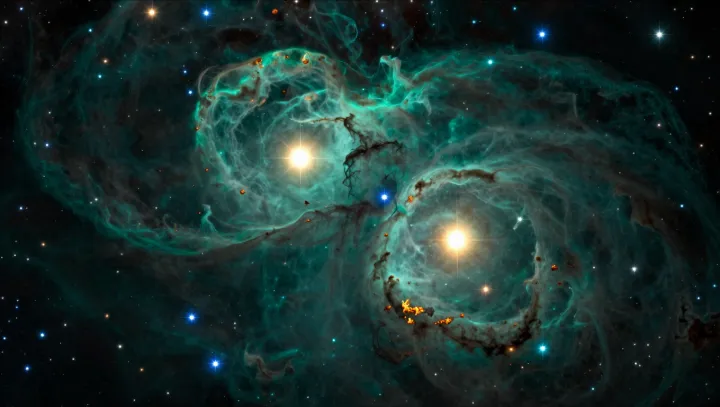
That green is translation. The apparent cosmic mist in Spitzer images represents infrared radiation assigned a visible color, rather than green light that an astronaut would see through a window. The distinction changes everything. Beyond the sensitivity of human eyes, dust and molecules emit radiation that the telescope recorded, allowing image makers to display otherwise invisible structures without pretending to reproduce ordinary eyesight.
False color deserves respect. Although the label can sound like an admission of fabrication, the underlying measurements are real: selected infrared wavelength bands receive visible colors so their spatial differences become readable. Green needs a caveat. In many Spitzer composites, green represents emission from polycyclic aromatic hydrocarbons, carbon-rich molecules whose infrared emission is excited by radiation from nearby stars, but assignments vary between images. Context supplies the answer. An image caption identifies which wavelengths were mapped to each color, preventing a display choice from being mistaken for a universal chemical code.
Beauty alone undersells Spitzer. Because infrared wavelengths can pass through dust that blocks visible light, its observations exposed embedded stars and helped astronomers distinguish molecular emission from the thermal emission of dust grains. Cold hardware made discovery possible. The telescope's cooled instruments reduced their own infrared output, which otherwise could have overwhelmed faint signals arriving from space. The mist remains evidence. Its apparent softness reflects structures measured across the sky, while its green belongs to a display that lets an invisible universe enter human sight without becoming what human sight expects.