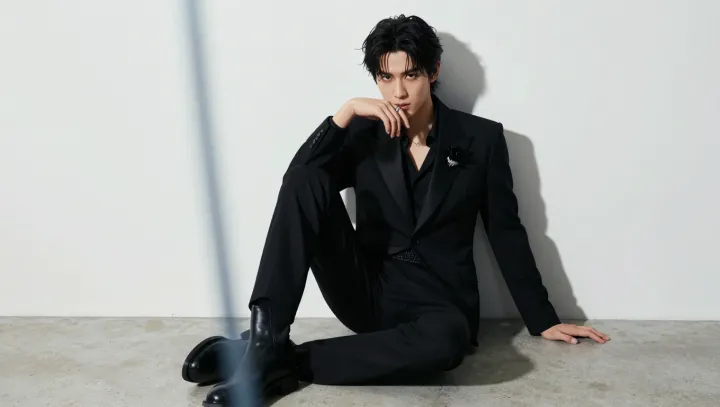
Authority dislikes a struggle. An all-black suit can look more commanding when the body inside it abandons the performance of command, allowing relaxed shoulders and an upright stance to carry the impression. Force spoils the effect. Against an uninterrupted field of black, a clenched jaw or an exaggerated chest can become the detail that draws attention away from the clothes.
Restraint deserves better tailoring. Because black reduces the visible contrast between jacket and trousers, the silhouette takes on particular importance, making balance across the shoulders and a clean trouser line useful considerations. Fit should permit ease. A jacket's armhole and sleeve pitch affect how it accommodates the arms, while tightness across the upper back can make an otherwise ordinary stance feel like a pose. Stillness need not stiffen. The aim is to stand comfortably upright, with the head balanced above the torso rather than the chin lifted in a declaration of rank.
Gestures spend that authority. When hands repeatedly adjust lapels, tug cuffs or punctuate every phrase, they compete with the suit's visual simplicity and can suggest that its wearer is monitoring the effect. Leave some space unfilled. Hands can rest naturally between gestures, and shoulders can settle without collapsing forward, preserving a distinction between ease and slouching that matters more than theatrical severity. Black supplies enough drama. Most persuasive is the figure who seems able to move, speak or remain silent without consulting the clothes first, as though the suit has ceased to require an audience.