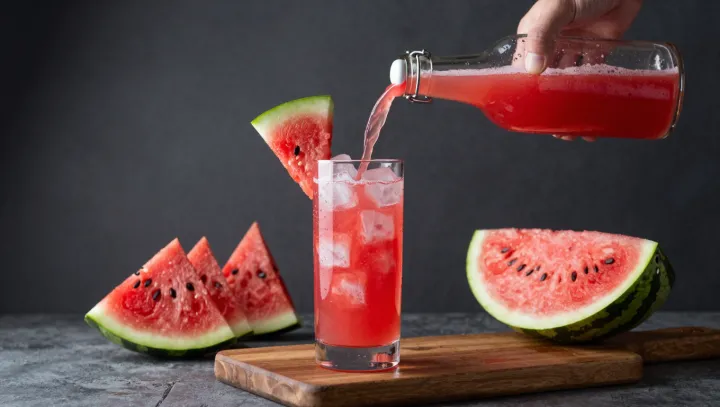
Ice shortchanges watermelon juice. Although ordinary cubes cool the drink, the water they contribute as they melt lowers the concentration of the fruit's sugars and other soluble solids, leaving less flavor in each sip. Frozen fruit works harder. Blended with chilled watermelon, frozen watermelon cubes supply cold and fruit together, without added sugar.
The freezer deserves priority. Cut the flesh into small, seedless pieces, spread them on a tray until frozen solid, then transfer them to a freezer container so they remain easy to portion. Keep another portion chilled. When ready to blend, start with more refrigerated fruit than frozen fruit, allowing the liquid released by the chilled pieces to help the blades circulate. Texture sets the limit. Add frozen pieces gradually until the juice reaches the coldness and consistency desired, stopping before a drink becomes an unmanageable mound of slush. Skip the water splash. If the blender struggles, add more chilled watermelon rather than water, and follow the appliance's instructions for processing frozen ingredients.
Sweetness starts before blending. A ripe watermelon supplies the natural sugars; freezing adds none, and this method prevents dilution rather than concentrating the fruit beyond its original composition. The physics stays simple. During melting, latent heat absorption helps cool the mixture, while the frozen flesh contributes watermelon juice instead of the plain water supplied by conventional ice. Serve it without delay. Blending leaves suspended pulp, so the result is fuller than strained juice, with a texture that shifts as the frozen pieces melt. The glass keeps its summer.