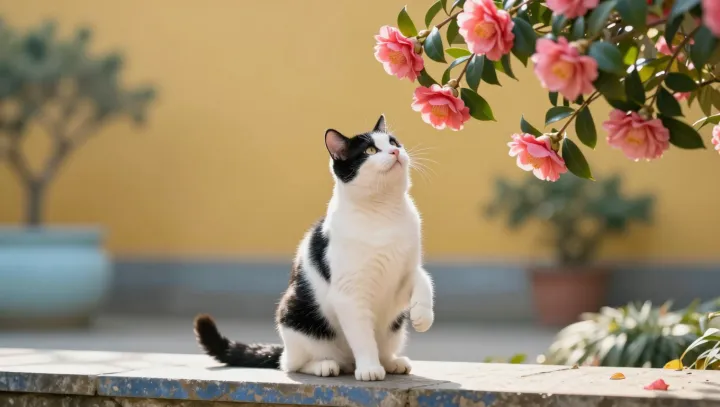
Cats cannot taste sweetness. Behind the hunter's finely tuned senses lies a genetic omission: TAS1R2, which supplies part of the mammalian sweet-taste receptor, no longer produces a functional protein in cats. Sugar gets no audience. Although their tongues detect other qualities of food, the receptor machinery that makes sweetness perceptible to humans cannot assemble as it normally would.
The defect is specific. In mammals with conventional sweet perception, two protein subunits, T1R2 and T1R3, join to form a heterodimer that detects sugars and initiates signaling in taste receptor cells. Cats lack that partnership. Their TAS1R2 sequence contains disabling mutations, including a deletion, making it a pseudogene rather than a working set of protein instructions. This is not indifference. A cat does not merely rank sugar below meat; it lacks the functional receptor combination through which many other mammals perceive sweetness, a distinction that separates sensory incapacity from an ordinary food preference.
Dessert interest proves little. When a cat investigates ice cream or cake, its attention may reflect fat, protein, smell or texture, rather than the sweetness that dominates a human's experience of the same food. Appetite is not evidence. Cats are obligate carnivores, and their reliance on animal tissue fits with the loss of sweet perception, although that fit alone does not establish exactly how the genetic change evolved. Their senses remain selective. Beside a dish that smells inviting, the hunter can encounter a whole meal's worth of signals while missing the pleasure its human companion considers the main attraction.