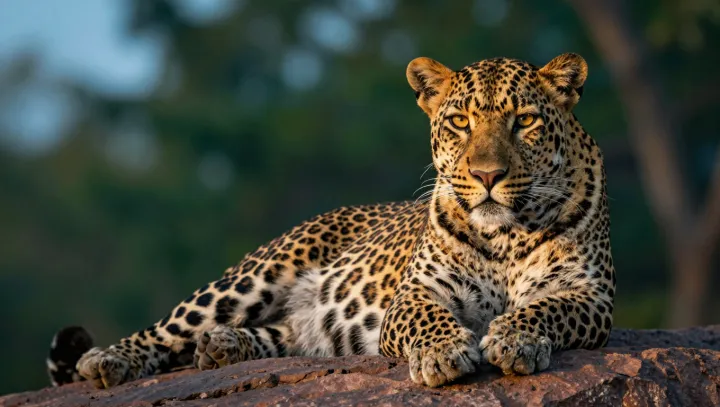
The climb buys ownership. Leopards haul carcasses into trees chiefly because a meal left on the ground can become someone else's dinner, especially where hyenas and lions patrol. Strength serves an appetite. What looks like an extravagant feat of lifting is often a practical response to kleptoparasitism, the theft of food by another animal.
Dinner needs a defense. A solitary leopard that has spent energy stalking, chasing and killing prey risks losing that investment when stronger competitors arrive, so carrying the carcass upward can improve its chances of feeding undisturbed. Trees filter the competition. Hyenas cannot follow a leopard up a trunk, although lions can climb and an elevated cache is not completely secure. Anatomy makes escape possible. Powerful jaw, neck and forelimb muscles, together with claws that grip bark, allow a leopard to hold its kill while pulling and pushing upward; some individuals can haul prey exceeding their own body mass.
Not every kill ascends. Whether a leopard caches prey above ground depends on carcass size, available trees and the likelihood of interference, because lifting a heavy load also costs energy and carries the risk of a fall. Storage extends the payoff. By wedging a carcass among branches, a leopard can leave and return for additional meals, although elevation does not prevent decay or exclude every scavenger. The ground sometimes suffices. Where theft pressure is lower, or a carcass is too awkward to lift, feeding below may be the better bargain. Above the waiting jaws, a branch becomes a dining room with a door.